 Save to Pinterest
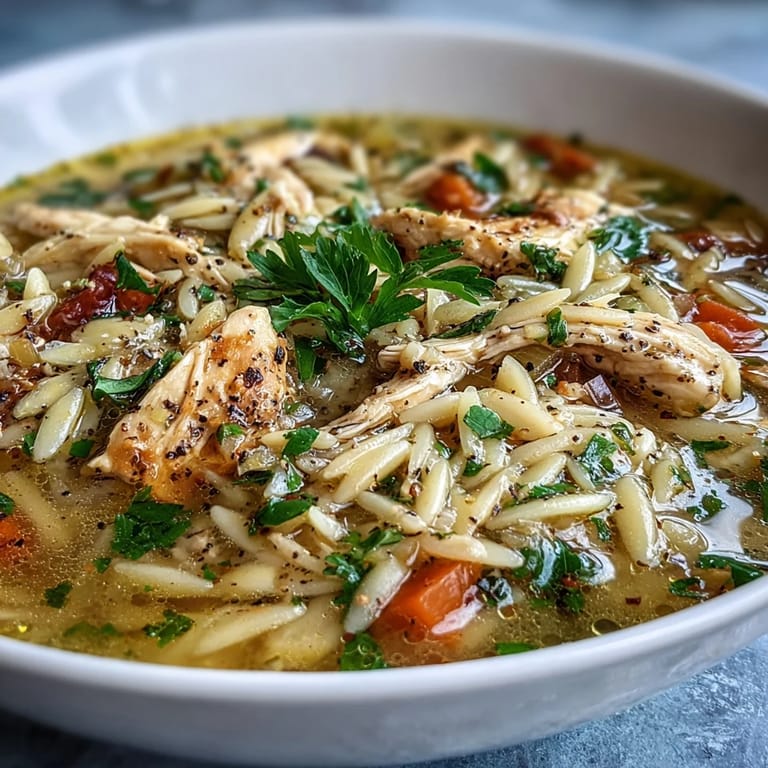
 There's something about March that demands a bowl of soup, and this lemon pepper chicken orzo became my answer to those days when the weather can't decide what it wants to be. I was standing in my kitchen one afternoon, staring at chicken breasts and a half-empty lemon, when I realized I could build something that tasted both bright and deeply comforting. The zest went in first, filling the air with that sharp citrus promise, and by the time the orzo was tender, I knew I'd stumbled onto something special.
I made this for my neighbor once when she was recovering from a cold, and watching her face light up as she tasted that first spoonful made me understand why certain soups become legendary in families. She called me the next week asking for the recipe, and now it's apparently a regular in their rotation. That's when I realized this soup wasn't just about feeding yourself—it was about showing up for people with something that actually heals.
Ingredients
- Boneless, skinless chicken breasts (about 400 g total): They cook quickly and shred beautifully, though if you're willing to wait longer, thighs add a deeper, silkier quality that makes the broth sing.
- Yellow onion, carrots, and celery: This is your foundation—that classic trio that builds flavor from the ground up.
- Garlic cloves: Just three is enough; you want it to whisper, not shout.
- Low-sodium chicken broth (1.5 liters): The quality of your broth matters more than you'd think, so taste it before adding extra salt.
- Lemon zest and juice: Use a microplane for the zest so you get those bright oils without the bitter white pith, and squeeze your lemon fresh.
- Freshly ground black pepper (1.5 tsp): This is the soul of the dish, so don't skip the fresh grinding—pre-ground pepper has lost its punch.
- Kosher salt: It dissolves more evenly than table salt and gives you better control over seasoning.
- Dried bay leaf: It quietly builds depth in the background and makes a real difference compared to skipping it.
- Orzo pasta (120 g): These tiny rice-shaped noodles absorb the broth and become tender without falling apart.
- Fresh parsley and Parmesan cheese: The parsley adds a fresh note at the end, while cheese is optional but transforms a simple bowl into something you'll crave.
Tired of Takeout? 🥡
Get 10 meals you can make faster than delivery arrives. Seriously.
One email. No spam. Unsubscribe anytime.
Instructions
- Sauté your base:
- Heat a splash of olive oil in your pot over medium heat, then add the onion, carrots, and celery. You'll know they're ready when the onion becomes translucent and the whole pot smells like comfort—about five minutes. Listen for the gentle sizzle, not an aggressive sear.
- Wake up the garlic:
- Stir in your minced garlic and cook for just a minute until the kitchen fills with that unmistakable aroma. This short window is crucial—you want fragrant, not burned.
- Build the broth:
- Add the chicken breasts, broth, lemon zest, lemon juice, black pepper, salt, and bay leaf to the pot. Bring it to a gentle boil—you're looking for steady bubbles, not an aggressive rolling boil that'll toughen the chicken.
- Cook the chicken through:
- Reduce the heat, cover, and simmer for fifteen to eighteen minutes until the chicken is cooked through. The meat should feel tender when you pierce it with a knife, and the broth will turn pale golden from the chicken fat.
- Shred and continue:
- Remove the cooked chicken to a plate and shred it with two forks—it'll fall apart naturally and unevenly, which is exactly what you want. Don't forget to fish out the bay leaf before continuing.
- Cook the orzo:
- Bring the broth back to a boil and stir in the orzo. Let it cook uncovered for eight to ten minutes, stirring occasionally so the pasta doesn't clump. You're aiming for that texture where it's soft but still has a slight resistance when you bite it.
- Bring it all together:
- Return the shredded chicken to the pot and taste your work. This is your moment to adjust the seasoning—add more salt if it needs it, grind in extra pepper if you're feeling bold, or squeeze in a bit more lemon juice if you want it brighter.
- Finish with freshness:
- Remove from heat and stir in the chopped parsley, which adds a visual pop and a fresh, clean note that balances the richness.
- Serve immediately:
- Ladle into bowls while it's hot and steaming, then let people garnish their own with extra black pepper, a squeeze of fresh lemon, and Parmesan if they want it.
 Save to Pinterest
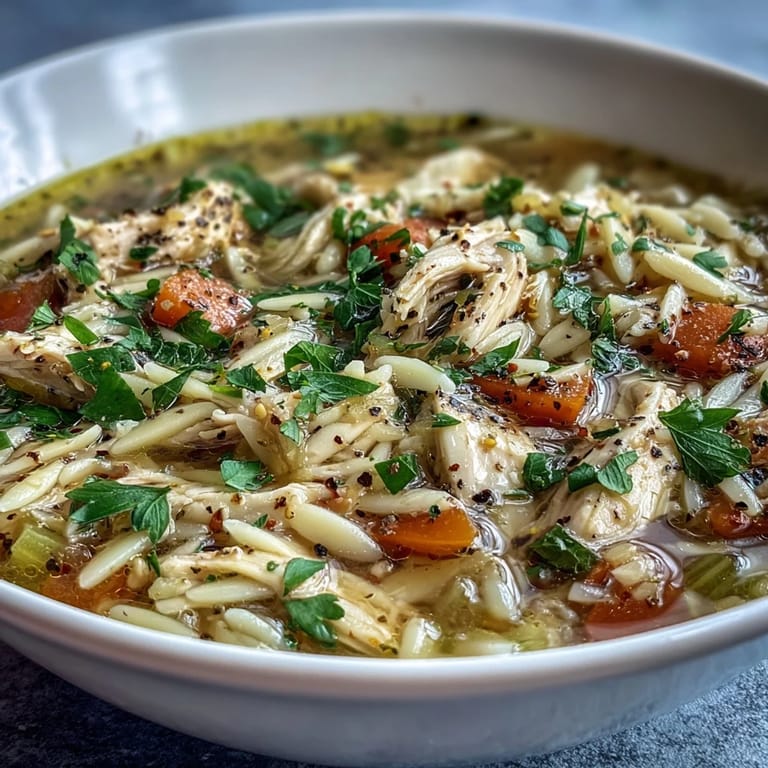
 There's a moment in cooking this soup where the kitchen smells like pure sunshine and pepper, and that's when you know everything is about to be worth it. It's become my go-to proof that you don't need cream or complexity to make something people genuinely want to eat.
Why This Soup Works Year-Round
Sure, I said March, but honestly this soup shows up in my pot whenever someone needs something uplifting. In summer, I serve it cold with extra lemon and it becomes a different dish entirely. The pepper gives it personality no matter the season, and the brightness keeps it from ever feeling heavy or out of place, whether you're shaking off winter or cooling down in the heat.
Customizing Without Losing the Soul
The beautiful thing about this recipe is how it bends to what you have on hand. Spinach wilts in beautifully in the last minute if you want greens, and swapping orzo for small ditalini pasta or even rice changes nothing about how good it tastes. I've made it with rotisserie chicken when I'm short on time, and it cuts the cooking down to maybe twenty minutes without sacrificing a single thing.
The Pepper Question and Other Finishing Touches
This soup absolutely depends on freshly ground black pepper to sing, so if you've been using pre-ground, treat yourself to a good pepper grinder and taste the difference immediately. The pepper isn't a background player here—it's the whole point. When you're plating, don't be shy about that extra crack of pepper on top; it catches your tongue in the best way and reminds you this is a soup with personality.
- A good squeeze of fresh lemon juice at the table lets everyone dial in their own brightness level.
- If you have good Parmesan, it's absolutely worth grating fresh over the top rather than using the shaker kind.
- Leftover soup keeps beautifully for three or four days, and the flavors actually deepen as it sits.
 Save to Pinterest
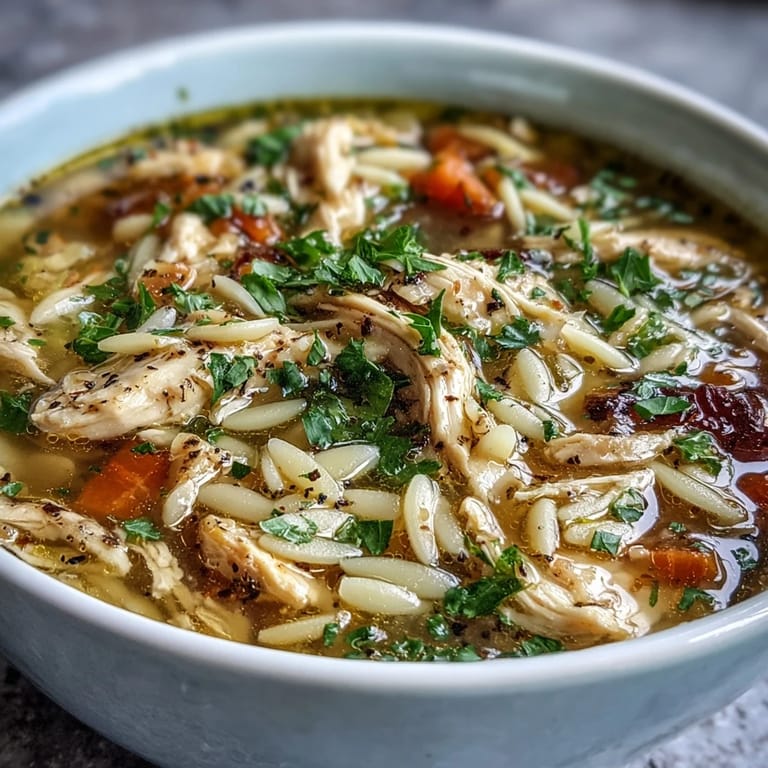
 This is the kind of soup that reminds you cooking doesn't have to be complicated to be memorable. Make it and see why people keep asking for it.
Recipe FAQs
- → What makes this soup bright and flavorful?
The combination of fresh lemon zest and juice adds a bright, citrusy note, while plenty of freshly ground black pepper provides warmth and depth. These ingredients transform a simple chicken soup into something special.
- → Can I make this gluten-free?
Yes, simply substitute the orzo pasta with gluten-free orzo or rice. Always double-check broth and pasta labels to ensure no hidden gluten-containing ingredients.
- → How do I prevent the orzo from getting mushy?
Cook the orzo separately in the boiling broth for 8-10 minutes until al dente, then remove from heat immediately. The pasta will continue to soften slightly in the hot soup, so slightly undercooking is ideal.
- → Can I use bone-in chicken thighs instead?
Absolutely. Bone-in chicken thighs will provide a richer flavor and more tender meat. Simmer for 20-25 minutes until cooked through, then shred and return to the pot.
- → How long does this soup keep?
Store in an airtight container in the refrigerator for up to 4 days. Note that the orzo will continue absorbing liquid, so you may need to add extra broth when reheating. Freezing is not recommended as the pasta can become mushy.
- → What can I add for extra vegetables?
Stir in a handful of baby spinach, kale, or chopped Swiss chard during the last 2 minutes of simmering. Diced zucchini or green beans work well when added with the carrots and celery.