 Save to Pinterest
 There's something almost meditative about roasting butternut squash on a crisp autumn afternoon, watching the cubes transform from pale orange to deep caramel in the oven's warmth. I discovered this soup by accident when a friend arrived unannounced on a Saturday and I had half a squash sitting on my counter, wondering what to do with it. Three hours later, after bowls had been emptied and seconds requested, I realized I'd stumbled onto something genuinely special—a soup that tastes like it took all day but actually comes together in an hour.
I made this for my partner's family on Thanksgiving and watched his grandmother ask for the recipe before finishing her first spoonful, which still feels like winning some kind of cooking lottery. That moment taught me that good food doesn't need to be fussy; it just needs to taste like someone cared enough to roast the squash properly.
Ingredients
- Butternut squash, 1 large (about 1.2 kg / 2.5 lbs), peeled, seeded, and cubed: This is the star, and roasting it transforms it from bland to honeyed and rich—don't skip this step even if it feels like extra work.
- Yellow onion, 1 medium, chopped: The base that builds flavor, sweet and mellow once it caramelizes slightly in the pot.
- Garlic, 2 cloves, minced: Just enough to whisper in the background without announcing itself.
- Vegetable broth, 1 liter (4 cups): Use good broth if you have it; you'll taste the difference immediately.
- Water, 250 ml (1 cup): Keeps the broth from being too concentrated and lets the squash flavor shine.
- Coconut milk or heavy cream, 120 ml (1/2 cup): Coconut milk makes it vegan and beautifully rich; cream makes it luxurious and almost decadent—choose based on your mood.
- Pure maple syrup, 2 tbsp: The secret that makes people ask if you added dessert, it doesn't make the soup sweet but rather deepens all the other flavors.
- Ground nutmeg, 1/4 tsp and ground cinnamon, 1/2 tsp: These warm spices are what make people close their eyes on the first spoonful.
- Olive oil, 2 tbsp total: Some for roasting, some for sautéing, both essential for flavor development.
- Salt and freshly ground black pepper, to taste: Taste as you go; the soup will need more seasoning than you'd expect.
Tired of Takeout? 🥡
Get 10 meals you can make faster than delivery arrives. Seriously.
One email. No spam. Unsubscribe anytime.
Instructions
- Heat your oven and prep the squash:
- Preheat to 200°C (400°F) and while it warms, get your butternut squash cubed—this is the only genuinely tedious part, but you'll feel accomplished once it's done. Toss the cubes with 1 tablespoon olive oil, salt, and pepper, spreading them on a baking sheet in a single layer.
- Roast until caramelized:
- Pop them in for 30–35 minutes, turning them halfway through so they brown evenly on all sides. You'll know they're ready when the edges are deep golden and a fork sinks through like butter.
- Build your base:
- While squash roasts, heat 1 tablespoon olive oil in a large pot over medium heat, add your chopped onion, and let it soften for 4–5 minutes until it's translucent and smells sweet. Add the minced garlic and cook for just 1 minute more—this is where the soup's depth begins.
- Combine everything:
- Add your roasted squash to the pot along with the vegetable broth, water, maple syrup, nutmeg, and cinnamon, stirring well to distribute the spices evenly. Bring it to a boil, then drop the heat and let it simmer gently for 10 minutes so the flavors meld together.
- Blend until silky:
- Using an immersion blender, purée everything until the soup is completely smooth and creamy—if you're using a countertop blender, work in batches and be careful with the hot liquid. The transformation from chunky to velvet happens in moments and never gets old.
- Finish with creaminess:
- Stir in your coconut milk or cream, taste carefully, and adjust salt and pepper until it tastes like comfort in a bowl. If it's cooled down, reheat gently without boiling.
- Serve with intention:
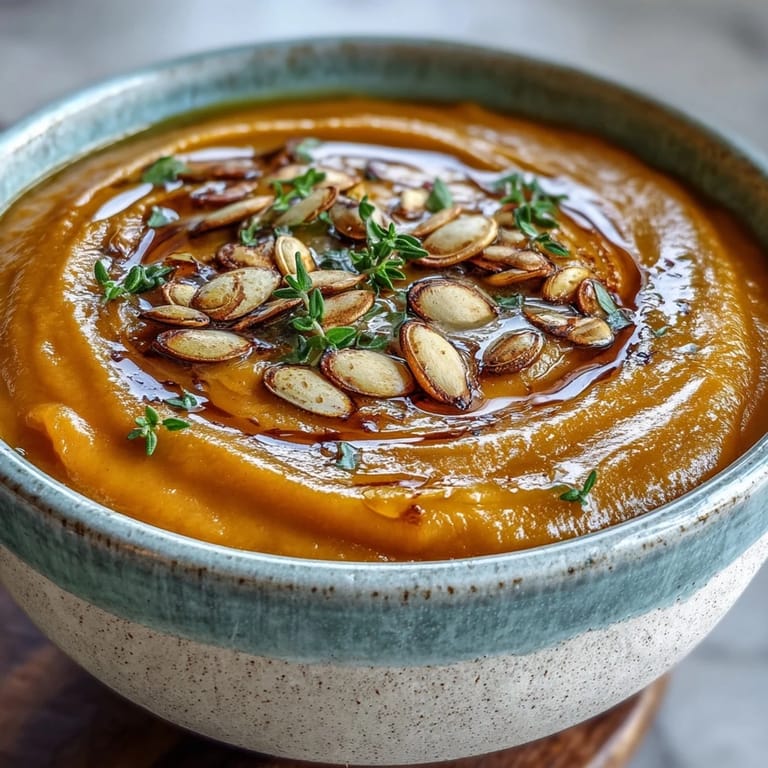
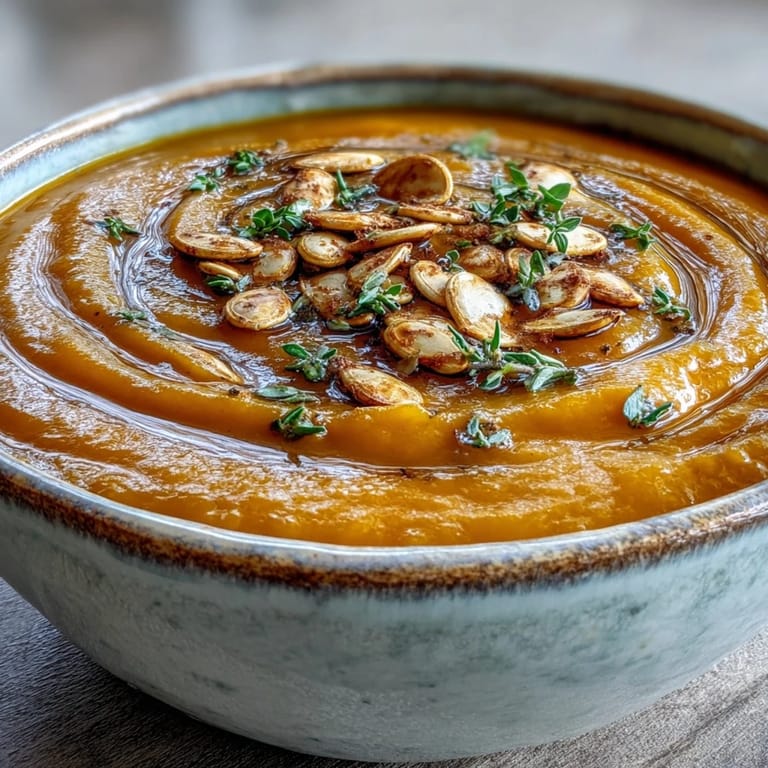
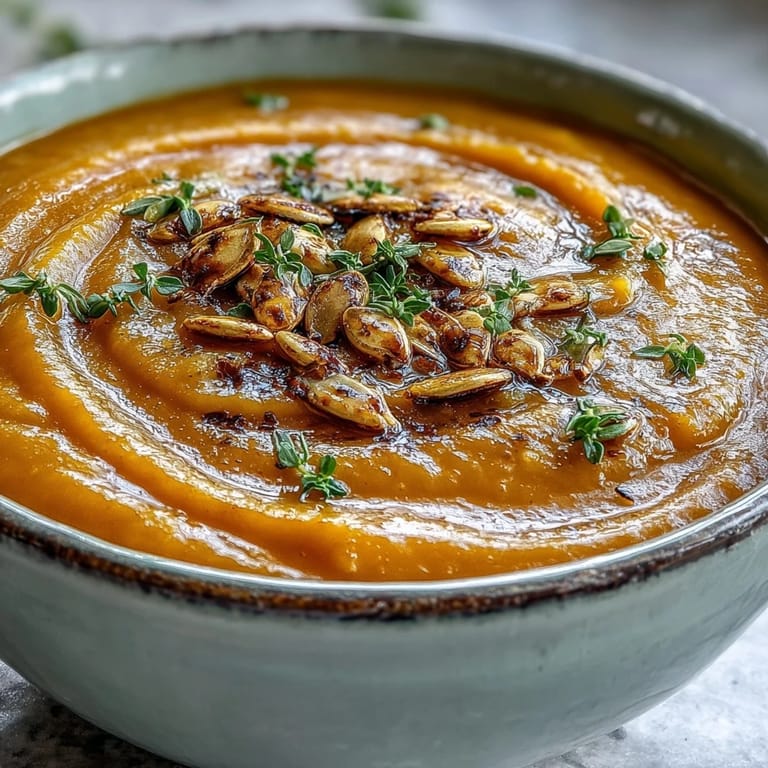
- Ladle into bowls and scatter toasted pumpkin seeds on top, drizzle with a tiny bit more maple syrup, and add fresh thyme if you have it—these garnishes turn a simple soup into something you'll want to photograph.
 Save to Pinterest
 Last winter, I made this soup on a Sunday morning and left it simmering while I read the newspaper, and the smell that filled my kitchen was so good it felt like I'd done something important. My kids came downstairs asking what smelled like fall, and suddenly we were all at the table with bowls of soup before noon—no complicated preparation, just good food that brought everyone together.
When to Serve This Soup
This is the soup that makes sense in September when you're not quite ready to let summer go, or in November when you need something warm that isn't heavy. It works as an elegant first course at a dinner party, a cozy lunch on a rainy Tuesday, or even a light supper with bread and cheese when you don't feel like cooking anything serious. The beautiful color means it always looks intentional, even when you threw it together on a weeknight.
Variations Worth Trying
Once you've made this soup as written, you can play with it in ways that keep it interesting. I've added a pinch of cayenne pepper for guests who like heat, swapped the cinnamon for fresh ginger, and once made it with brown butter instead of olive oil, which added a nuttiness that was almost too good. Some people stir in a splash of apple cider vinegar at the very end for brightness, and others top it with crispy sage instead of thyme—your kitchen, your rules.
Make It Your Own
The beauty of this soup is that it's flexible enough to adapt to what you have on hand and forgiving enough that small changes won't derail it. If you're vegan, use coconut milk and vegetable broth, and you've got a completely satisfying soup that makes no compromises on flavor. For a dairy-free version that's still rich, the coconut milk does the heavy lifting, and for those who want decadence, use good heavy cream and don't apologize for it.
- If fresh butternut squash isn't available, frozen roasted squash works perfectly—just skip the roasting step and add it directly to the pot.
- Leftover soup keeps for four days in the fridge and freezes beautifully for up to three months, so you can make a double batch and thank yourself later.
- Serve with crusty bread for soaking up every last spoonful, or pair it with a simple green salad if you want something lighter alongside it.
 Save to Pinterest
 This soup tastes like home and effort without requiring either to be complicated, which is maybe the best thing a recipe can be. Make it this week and see why I keep coming back to it.
Recipe FAQs
- → Can I make this soup vegan?
Yes, simply use coconut milk instead of heavy cream. The soup remains creamy and delicious while being completely plant-based.
- → Why roast the butternut squash instead of boiling it?
Roasting caramelizes the squash's natural sugars, intensifying its sweetness and adding depth of flavor that boiling cannot achieve.
- → Can I use a different sweetener instead of maple syrup?
While maple syrup adds a unique flavor, you can substitute with honey or agave nectar. Adjust the amount to taste.
- → How do I store leftover soup?
Store in an airtight container in the refrigerator for up to 4 days, or freeze for up to 3 months. Reheat gently on the stovetop.
- → Can I add more spices to this soup?
Absolutely! Try adding a pinch of cayenne pepper for heat, ginger for warmth, or curry powder for an exotic twist.
- → What can I serve with this soup?
Crusty bread, garlic toast, or a fresh green salad make excellent accompaniments. Grilled cheese sandwiches also pair beautifully.