 Save to Pinterest
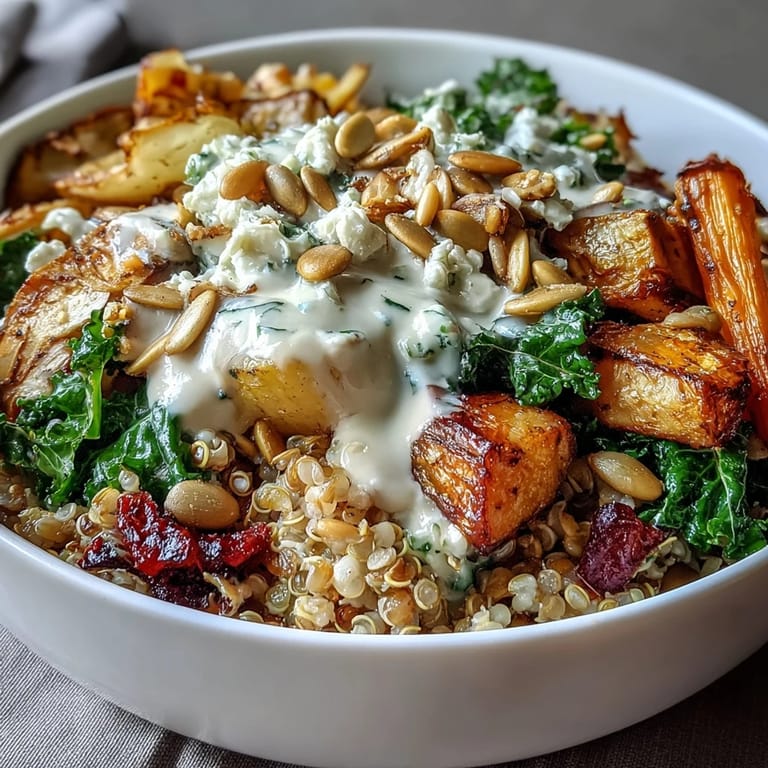
 Last February, I was standing in my kitchen on one of those gray afternoons where the world outside looked frozen and uninviting, when I realized I had a pile of root vegetables that needed rescuing and a half-empty container of tahini calling out for a purpose. What emerged was this grain bowl—warm, grounding, and impossibly satisfying in a way that made me forget the cold entirely. It's become my answer to winter's demand for comfort that doesn't leave you feeling sluggish afterward.
I made this for my sister the Sunday after she moved back to the city, and watching her eat it while telling me about her new apartment—the way her shoulders finally relaxed, the way she went back for seconds without thinking—that's when I knew this bowl had something special. It's the kind of food that doesn't demand conversation or performance; it just nourishes quietly while you live your life.
Ingredients
- 1 cup farro or quinoa: Farro has this nutty, chewy texture that holds up beautifully to the creamy dressing, though quinoa works if you need gluten-free and cooks faster.
- 2 cups vegetable broth or water: Broth adds subtle flavor that water won't, but don't fret if you only have water on hand—the vegetables and dressing carry plenty.
- 2 medium carrots, peeled and diced: Cutting them into roughly half-inch cubes ensures they roast evenly and caramelize properly.
- 2 parsnips, peeled and diced: Parsnips get sweeter as they roast and add an earthiness that elevates the whole bowl.
- 1 small sweet potato, peeled and cubed: Sweet potato bridges the gap between the savory greens and the rich dressing with its natural sweetness.
- 2 tbsp olive oil for roasting: Good olive oil makes a real difference here—the vegetables are literally bathing in it.
- 1 tsp dried thyme: Thyme is essential; it's what makes these roasted vegetables taste intentional rather than accidental.
- 1/2 tsp sea salt and 1/4 tsp black pepper: Salt before roasting allows the vegetables to release their moisture and caramelize more effectively.
- 4 cups kale or Swiss chard, stems removed and chopped: Kale is sturdier and holds its texture better, but chard wilts faster if you're in a hurry.
- 1 tbsp olive oil for greens: Keep this separate from your roasting oil so you can control the heat and prevent burning the garlic.
- 1 clove garlic, minced: One clove is enough to flavor without overpowering; mince it finely so it disperses evenly.
- 1/4 cup tahini: Quality tahini makes all the difference—cheap tahini can taste bitter or gritty, so buy the good stuff.
- 2 tbsp fresh lemon juice: Squeeze it fresh; bottled lemon juice won't give you that brightness you need.
- 1 tbsp maple syrup: The sweetness balances the nuttiness of tahini and adds body to the dressing.
- 2 tbsp warm water: Warm water helps the tahini emulsify smoothly rather than seizing up.
- 1/2 tsp Dijon mustard: This is the secret weapon that makes the dressing taste more complex and helps it stay cohesive.
- 1/4 cup toasted pumpkin seeds: These add textural contrast and a subtle earthiness that grounds the whole bowl.
- 1/4 cup crumbled feta cheese: Optional but worth it if you eat dairy—it adds a salty, creamy element that makes people ask for the recipe.
- 2 tbsp fresh parsley: A handful of fresh herbs at the end wakes everything up and adds color.
Tired of Takeout? 🥡
Get 10 meals you can make faster than delivery arrives. Seriously.
One email. No spam. Unsubscribe anytime.
Instructions
- Heat your oven and prep the vegetables:
- Preheat to 400°F (200°C) and while it comes up to temperature, peel and dice your carrots, parsnips, and sweet potato into roughly half-inch pieces—consistency matters here because uneven sizes mean some vegetables finish roasting before others.
- Season and roast:
- Toss everything in a large bowl with the olive oil, thyme, salt, and pepper, then spread on a baking sheet in a single layer. Roast for 25 to 30 minutes, stirring halfway through, until the edges are golden and caramelized; the sweet potato should be completely tender.
- Cook your grains:
- While the vegetables roast, rinse your grains briefly under cold water to remove any dust. In a medium saucepan, combine grains with broth and bring to a boil, then reduce heat, cover, and simmer until tender—about 20 minutes for quinoa or 30 for farro.
- Wilt the greens:
- Heat 1 tbsp olive oil in a large skillet over medium heat, add minced garlic, and let it sizzle for just 30 seconds until fragrant. Add your chopped greens and a pinch of salt, then stir constantly for 3 to 4 minutes until completely wilted and tender.
- Make the dressing:
- In a bowl or measuring cup, whisk together tahini, lemon juice, maple syrup, warm water, and Dijon mustard until smooth and pourable. Start with 2 tablespoons of water and add more a splash at a time until you reach the consistency you want—it should coat a spoon but still flow easily.
- Assemble your bowls:
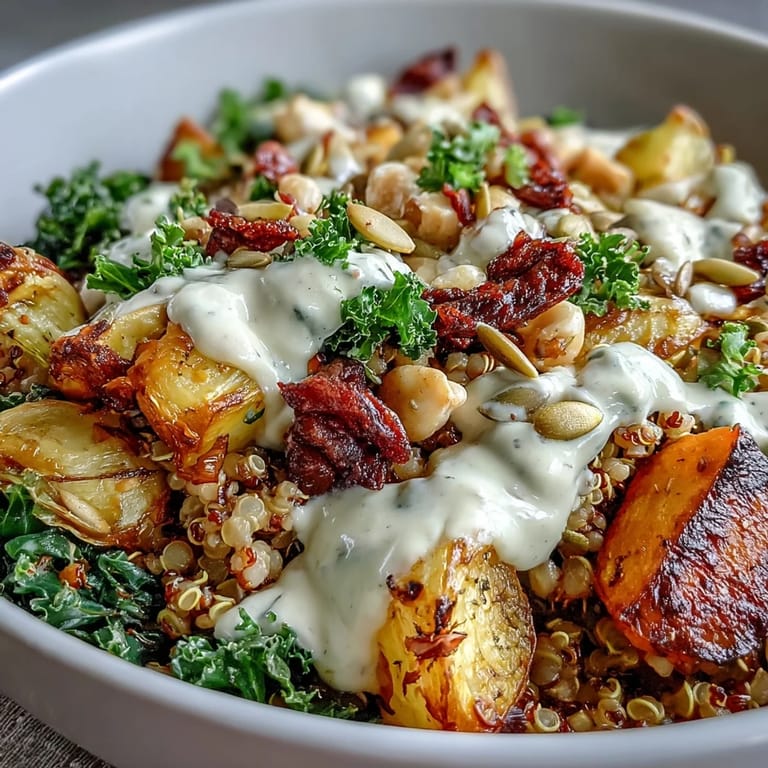
- Divide the warm grains among four bowls, then layer roasted vegetables on top and arrange wilted greens alongside. Drizzle generously with dressing—this isn't a salad, it's a warm, comforting meal, so be generous.
- Top and serve:
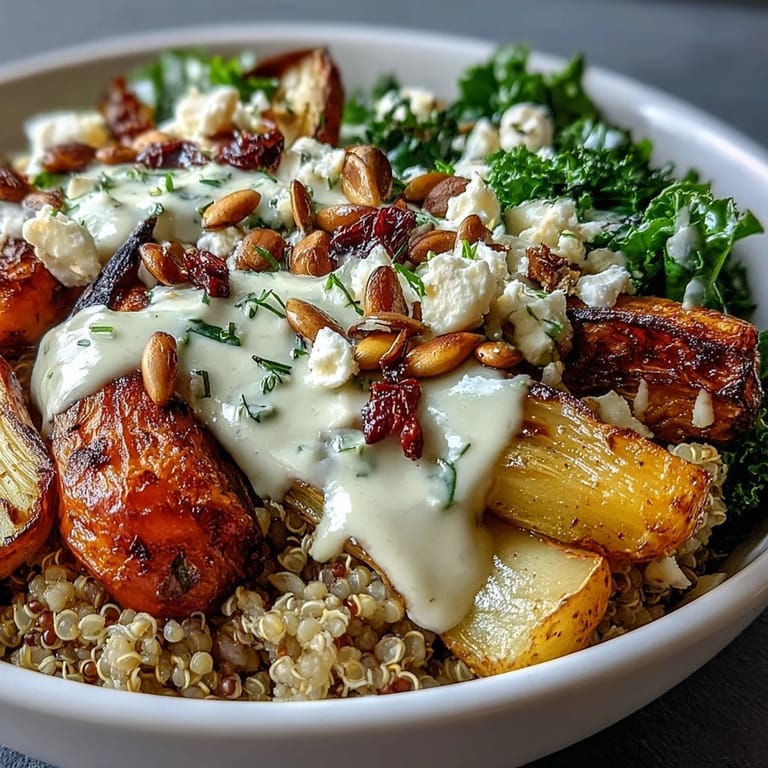
- Scatter pumpkin seeds, crumbled feta if using it, and fresh parsley across the top. Serve immediately while everything is still warm and the dressing can meld with the grains.
 Save to Pinterest
 My neighbor stopped by one evening and caught me assembling one of these bowls, and instead of just handing her a plate, she sat at my kitchen counter while I made hers, asking questions about each component like she was learning a secret language. That's when I understood this bowl isn't just food; it's an invitation to slow down and pay attention to what you're eating.
The Magic of Roasted Vegetables
There's something almost alchemical about what happens when root vegetables hit a hot oven for thirty minutes—the natural sugars concentrate and caramelize, creating this deep, complex flavor that raw or steamed vegetables can never achieve. I learned this the hard way after making sad, limp roasted vegetables for years before realizing I wasn't letting them get hot enough or giving them space on the pan. Now I spread them out generously and resist the urge to stir more than once, because those moments of stillness are when the magic happens.
Why Tahini Is Worth the Investment
The first time I made tahini dressing, I used whatever jar was cheapest at the grocery store, and the result tasted like I was eating toasted sawdust mixed with lemon. A friend who cooks seriously suggested I try a different brand, and suddenly the whole bowl transformed—the dressing became silky and luxurious instead of gritty and harsh. Good tahini should taste nutty and slightly sweet, never bitter or harsh, and it's worth spending a little extra because a small jar lasts through many bowls.
Building Flavor and Texture
What makes this bowl work isn't any single component but the way they all play together—warm grain provides the canvas, roasted vegetables add sweetness and depth, bitter greens bring balance, and the dressing ties everything into a cohesive whole. The pumpkin seeds add crunch, the feta adds salt and tang, and the parsley adds brightness and life to every bite. This bowl teaches you something essential about cooking: layering flavors and textures creates something exponentially better than any single ingredient could be alone.
- Taste as you go and adjust seasonings in the dressing, not the individual components, since it's easier to balance everything at the end.
- Let the bowl sit for two minutes before eating so the warm grains can absorb some of the dressing and everything melds together.
- Leftovers actually improve by the next day as flavors continue to develop, though reheat gently so the greens don't turn to mush.
 Save to Pinterest
 This bowl became my winter ritual because it proved that nourishing food doesn't have to be complicated or time-consuming, and that taking care of yourself through what you eat is one of the quietest acts of self-love. Make it once and it becomes yours forever.
Recipe FAQs
- → Can I make this ahead for meal prep?
Absolutely. The grains, roasted vegetables, and dressing each keep well for 4-5 days in the refrigerator. Store components separately in airtight containers and reheat the grains and vegetables before assembling with fresh dressing.
- → What grains work best in this bowl?
Farro adds a chewy, nutty texture that holds up beautifully. Quinoa cooks faster and provides complete protein. Brown rice, barley, or wheat berries would also work well—adjust cooking time accordingly.
- → How do I customize the roasted vegetables?
Feel free to swap in beets, turnips, rutabaga, or butternut squash. Root vegetables roast at similar temperatures and times, so you can mix and match based on what's available or in season.
- → Can I make the tahini dressing vegan?
The dressing is naturally vegan—omit the feta cheese or use a plant-based crumbled alternative. The tahini provides creamy richness without dairy, and maple syrup adds just the right amount of sweetness.
- → What protein additions work well?
Roasted chickpeas complement the roasted vegetables beautifully. Grilled chicken, baked tofu, or a poached egg would also make excellent additions. The bowl is satisfying on its own, but extra protein makes it more filling.
- → How do I store leftovers?
Keep grains, vegetables, and dressing in separate containers. Reheat grains and vegetables in the microwave or oven until warmed through. The dressing will thicken in the refrigerator—add warm water and whisk to restore consistency.