 Save to Pinterest
 My neighbor Farida once invited me over on a cold November evening and served this soup that completely changed how I understood comfort food. The aroma hit me the moment I walked in—earthy barley, warm spices, and something green and alive underneath it all. She explained it was her family's Persian recipe, the kind her grandmother made without measuring anything, just knowing. That night, watching her swirl sour cream into each bowl with such care, I realized soup could be both humble and ceremonial at once.
I made this soup for my book club last spring, and three people asked for the recipe before dessert even came out. One friend, who's usually skeptical about anything involving dried herbs, came back to the kitchen asking what I'd done to make it taste so alive. That's when I learned the secret wasn't any single ingredient—it was the timing of adding fresh herbs at the end, letting them brighten the whole pot just before serving.
Ingredients
- Beef stew meat, 500 g in 2 cm cubes: Cut to a consistent size so everything cooks evenly, and don't skip the browning step even though it seems fussy.
- Pearl barley, 1/2 cup rinsed: Rinsing removes the starch and keeps your soup from becoming gluey, something I learned after one cloudy pot that tasted fine but looked wrong.
- Dried lentils, 1/2 cup rinsed: They break down slightly during cooking and thicken the soup naturally, adding body without cream.
- Dried white beans or cannellini beans, 1/2 cup soaked overnight: Soaking matters because it helps them cook evenly and reduces any digestive concerns, plus they stay intact instead of falling apart.
- Large onion, finely chopped: The foundation of everything; take your time with this because it becomes the backbone of flavor.
- Carrots and celery, diced: The aromatic trio with onions builds depth that no shortcut can replace.
- Garlic, 2 cloves minced: Add this after onions soften so it doesn't burn and turn bitter on you.
- Fresh parsley, cilantro, dill, and chives, about 1.5 cups total chopped: These herbs are what separate this from a plain beef soup; they're added late so they stay bright and green.
- Dried mint, 2 tbsp: This becomes your garnish secret when fried in butter with onions, creating something crispy and fragrant.
- Sour cream, 200 g: The tangy swirl at the end balances the earthy soup and adds richness without heaviness.
- Olive oil, 2 tbsp and butter, 1 tbsp: The oil browns meat, the butter crisps your onion garnish.
- Turmeric, salt, and black pepper: Warming spices that hint at Persian kitchens without overwhelming the fresh herbs.
- Beef or vegetable stock, 2 liters: This is your liquid base; homemade is lovely if you have it, but quality store-bought works perfectly fine.
Tired of Takeout? 🥡
Get 10 meals you can make faster than delivery arrives. Seriously.
One email. No spam. Unsubscribe anytime.
Instructions
- Brown your beef first:
- Heat olive oil in your large pot over medium-high heat and let the beef cubes sit undisturbed for a couple minutes on each side until they're golden. This isn't about cooking them through; it's about creating flavor.
- Build your base:
- Remove beef, add remaining oil, and cook onions until they're golden and softened, which takes about six minutes. The kitchen should smell sweet and toasty at this point.
- Toast the spices:
- Stir in garlic, turmeric, pepper, and salt, cooking just long enough to wake them up—about one minute until fragrant. You'll notice the whole pot suddenly smells like somewhere warm and spiced.
- Add vegetables and build layers:
- Carrots and celery go in next, cooking for three more minutes to soften slightly. This creates depth that raw vegetables added at the end never achieve.
- Bring everything together:
- Return beef to the pot, add barley, lentils, beans, and stock. Bring to a boil, then lower the heat, cover, and let it simmer gently for an hour and a half, stirring now and then.
- Finish with herbs:
- After ninety minutes, stir in all your fresh herbs and let the soup simmer uncovered for ten more minutes. Taste and adjust salt if needed.
- Create the mint-fried onions:
- In a small skillet, melt butter over medium-low heat and add a thinly sliced onion. Cook it slowly until deeply golden and crispy, about ten minutes, then stir in dried mint for one more minute.
- Serve with ceremony:
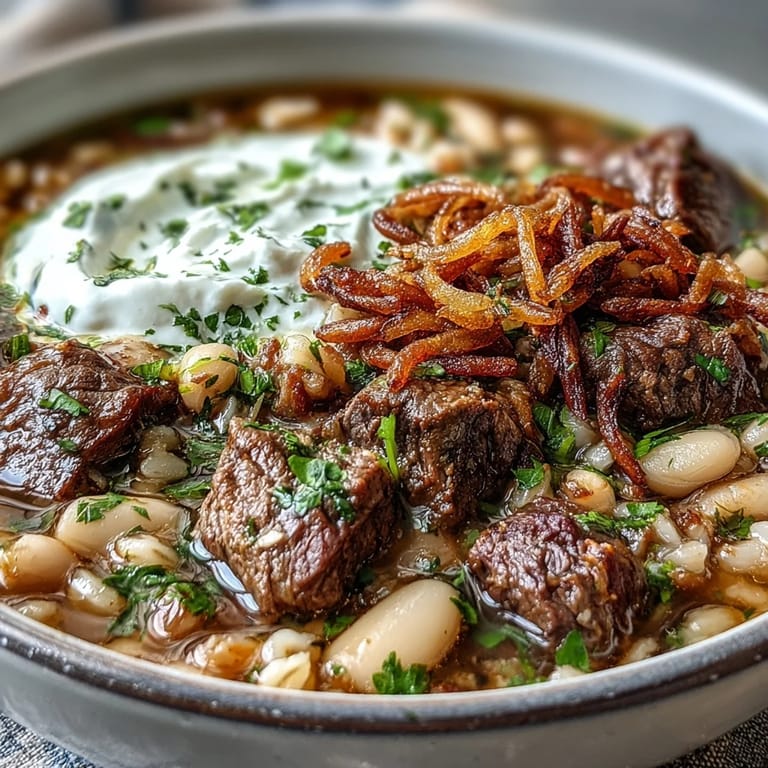
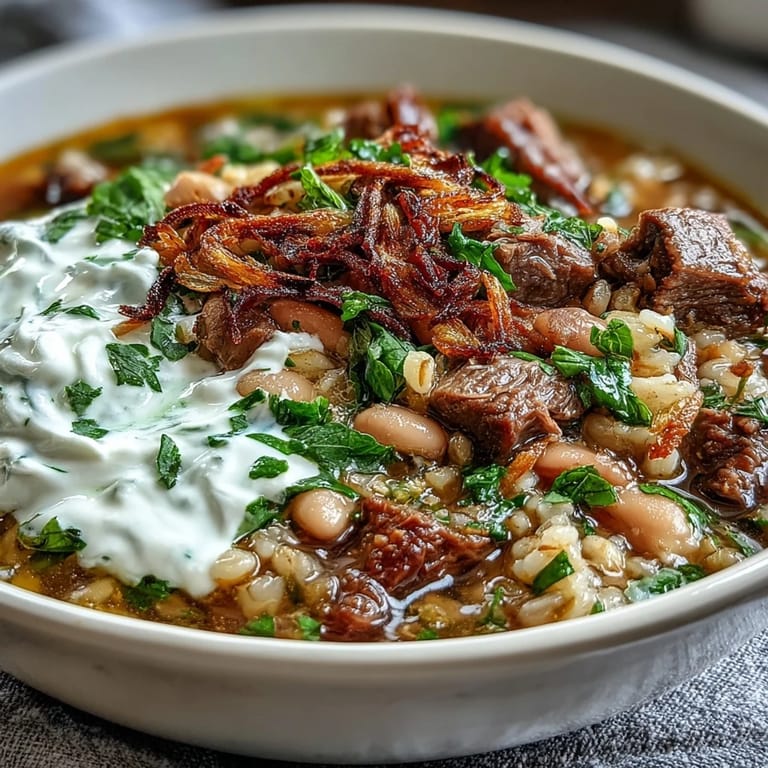
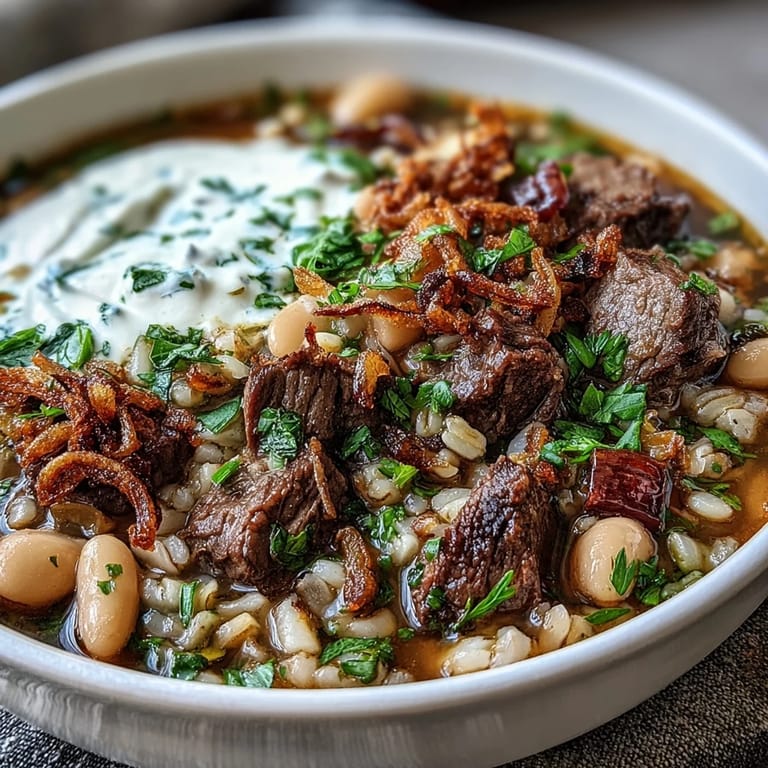
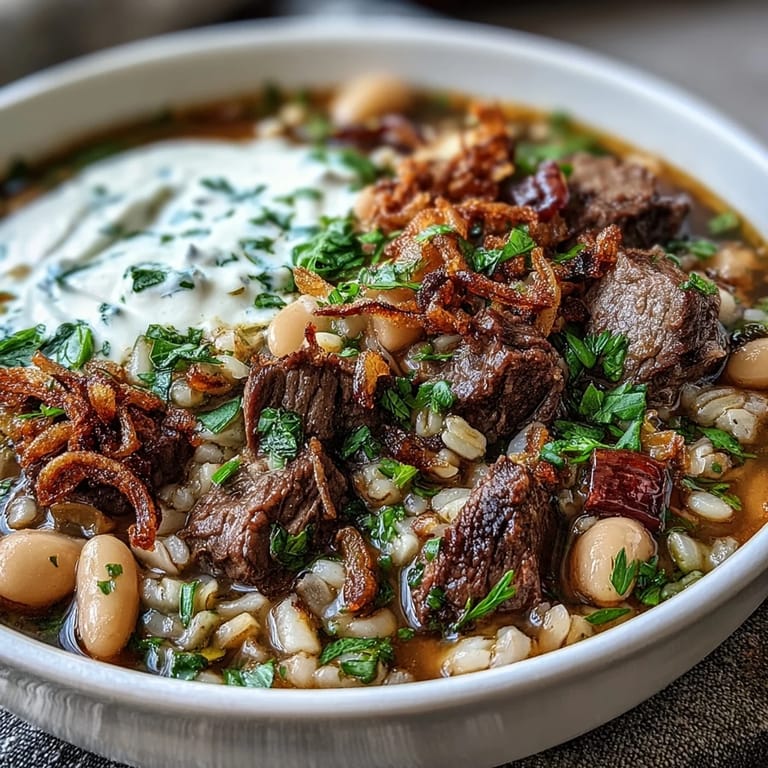
- Ladle soup into bowls, swirl one or two tablespoons of sour cream into each, and crown with those fragrant mint-fried onions. The temperature contrast between hot soup and cool cream is part of the magic.
 Save to Pinterest
  Save to Pinterest
 There's a moment late in the cooking when you lift the lid and the steam rises up carrying all these scents at once—earth, green, meat, spice—and you suddenly understand why food brings people together. That's the moment I know this soup is going to be good.
The Secret of Soaking Beans
I used to skip soaking beans because I thought it was fussy, and then one winter my beans stayed hard in the center no matter how long I simmered them. Now I soak overnight without question, and I've learned that this simple step isn't just about cooking time—it's about respect for the ingredient. Soaked beans absorb liquid more evenly, cook faster, and digest more gently, which is reason enough on its own.
Why Fresh Herbs Matter Here
This soup would work fine without the parsley, cilantro, dill, and chives, but it would be missing its soul. The moment those fresh herbs hit the hot soup at the end, they transform it from sustaining to memorable. I learned this when I once made the soup with just dried herbs mixed in at the start, and while it tasted good, it lacked the brightness that makes you crave another bowl.
Variations and Flexibility
This soup is forgiving in the best way—it welcomes changes based on what you have and what you love. A friend who's vegetarian asked if she could make it without beef, and now she makes it regularly with extra stock and sometimes adds spinach or beet greens for color. The structure remains solid; you're just adjusting the cast of characters.
- For vegetarian, simply omit beef and use vegetable stock, letting the legumes and grains become your protein.
- Kashk, a fermented whey traditional in Persian cooking, can replace or mix with sour cream for deeper, tangier flavor.
- You can add spinach, beet greens, or even diced potatoes in the last fifteen minutes if you want more substance or color.
 Save to Pinterest
  Save to Pinterest
 This soup has become my answer to almost everything—a cold day, a friend who needs nourishment, a moment when I want to cook something that feels both simple and special. It's the kind of dish that reminds you why kitchens exist.
Recipe FAQs
- → Can I make this soup vegetarian?
Yes, simply omit the beef and use vegetable stock instead of beef stock. The soup will still be hearty and flavorful with the barley, beans, lentils, and fresh herbs.
- → What can I substitute for sour cream?
For a more authentic Persian flavor, use kashk, a fermented whey product. Greek yogurt can also work as a tangy alternative if kashk is unavailable.
- → Do I need to soak the beans overnight?
Yes, soaking dried white beans or cannellini beans overnight ensures they cook evenly and become tender during the simmering process. Drain them before adding to the pot.
- → Can I add other greens to this soup?
Absolutely. Spinach or chopped beet greens make excellent additions for extra color and nutrition. Stir them in during the last 10 minutes of cooking.
- → How do I store and reheat leftovers?
Store cooled soup in an airtight container in the refrigerator for up to 4 days. Reheat gently on the stovetop, adding a splash of stock or water if needed to adjust consistency.
- → What type of beef works best for this soup?
Beef stew meat or chuck roast cut into 2 cm cubes works perfectly. These cuts become tender and flavorful after the long simmering time.