 Save to Pinterest
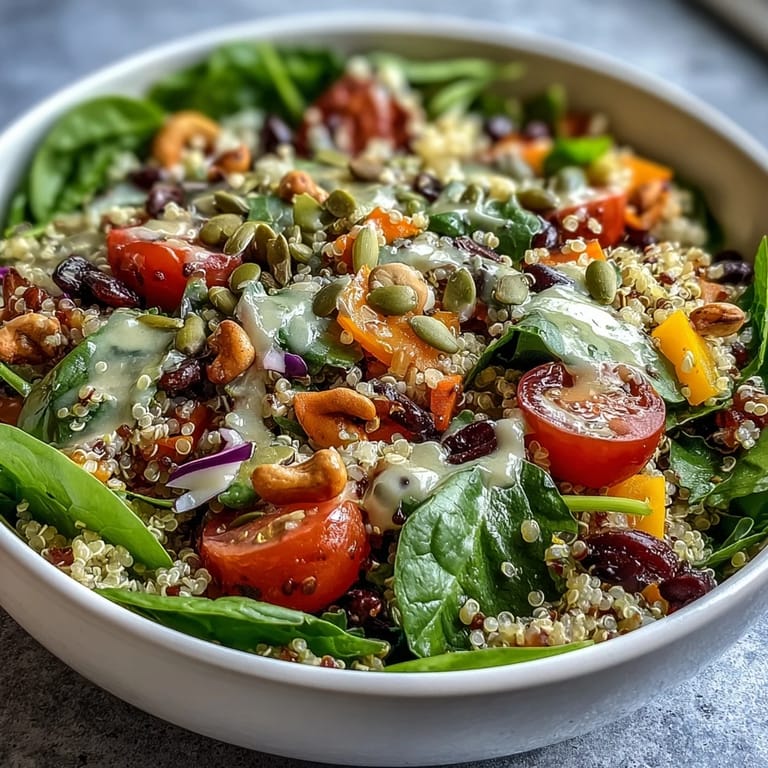
 My friend texted me a photo of her lunch that afternoon—a bowl so colorful it looked almost unreal, vegetables arranged like a painter's palette. She said it changed how she thought about eating, and I had to know what was in it. When she walked me through it, I realized this wasn't just a salad, it was a philosophy: every color meant something different your body needed, and somehow it all came together in this effortless, joyful way.
I made this for my family's Sunday dinner when my sister announced she'd gone vegan, my mom was watching her sodium intake, and my dad just wanted something that didn't feel like deprivation. Everyone sat down to the same bowl, and nobody felt like they were missing anything—that was the moment I understood why this recipe stuck around.
Ingredients
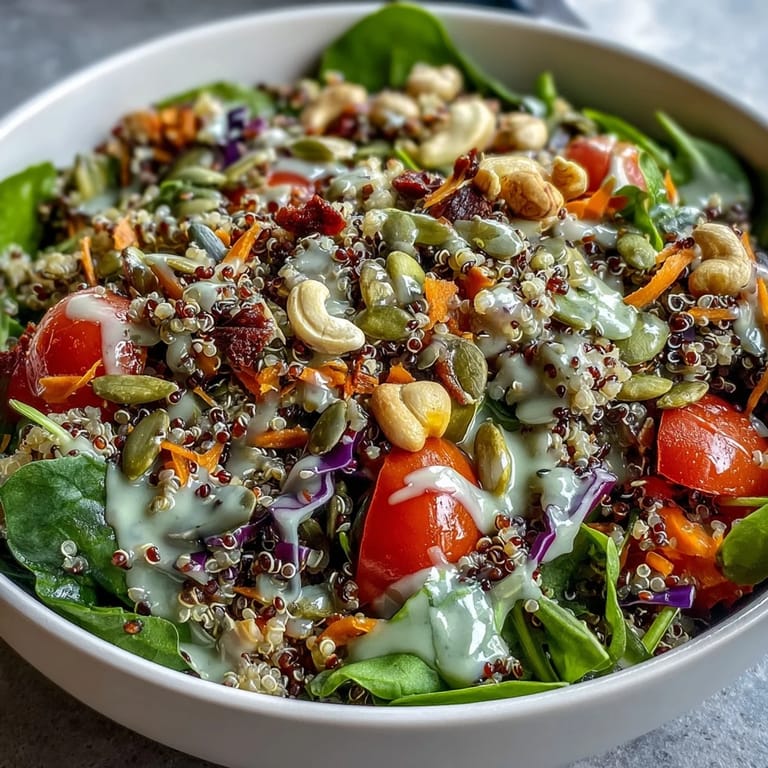
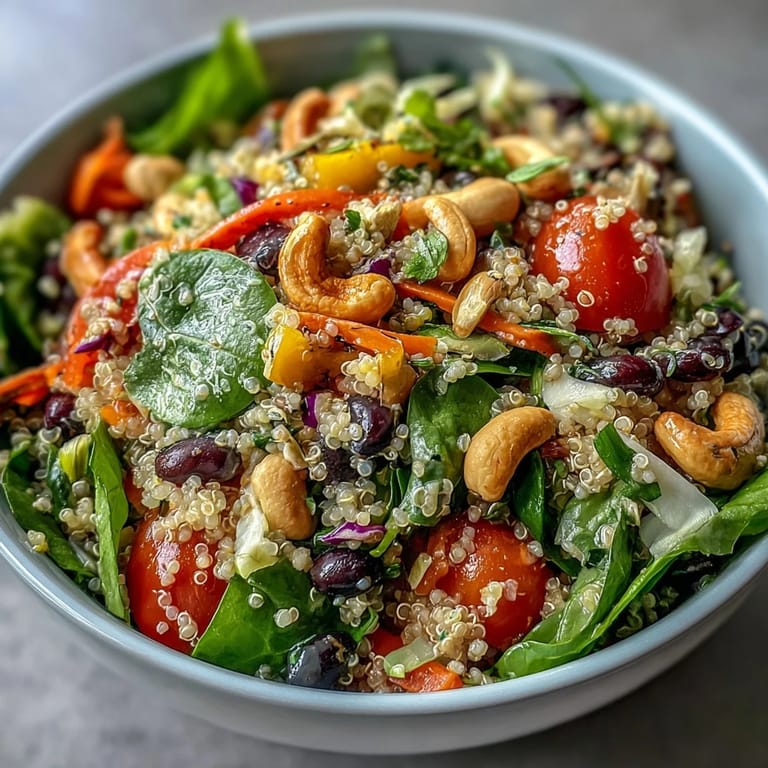
- Cooked quinoa or brown rice: The foundation that holds everything together; I cook mine ahead and chill it so the salad comes together faster.
- Cherry tomatoes: Halving them releases their sweetness and prevents them from rolling around—practical and delicious.
- Purple cabbage: The crunch lasts for days, and the color is show-stopping; shred it thin for the best texture.
- Grated carrots: Raw carrots stay crisp longer than most vegetables, making this salad travel-friendly.
- Yellow bell pepper: The sweetness balances the earthiness of the beans and greens beautifully.
- Baby spinach: Tender enough to eat raw without wilting, but sturdy enough to hold up to the dressing.
- Cucumber: Slice it right before serving if you want it crisp, or prep it earlier for a softer, more marinated texture.
- Chickpeas and black beans: Rinsing them removes the canning liquid and makes them less heavy; both together give you complete protein.
- Roasted cashews or almonds: The roasting matters—raw nuts taste flat by comparison, and the fat content makes the whole bowl feel indulgent.
- Pumpkin and sunflower seeds: These add unexpected texture and are packed with minerals that make you feel genuinely nourished.
- Extra-virgin olive oil: Don't skip quality here; it's the dressing's backbone and deserves respect.
- Fresh lemon juice: Bottled won't give you the same brightness, so squeeze it fresh if you can.
- Maple syrup or honey: Just a touch to round out the acidity and bring the vegetables alive.
- Dijon mustard: The emulsifier that keeps the oil and lemon from separating; it also adds a subtle sophistication.
- Minced garlic: Raw garlic is sharp and assertive, which is exactly what this dressing needs.
- Fresh parsley or cilantro: Chop it at the last second so it stays bright green and aromatic.
Tired of Takeout? 🥡
Get 10 meals you can make faster than delivery arrives. Seriously.
One email. No spam. Unsubscribe anytime.
Instructions
- Cook and cool your grains:
- Follow the package instructions, then spread the cooked grains on a plate to cool faster—warm grains will wilt your greens and mess with the texture. I usually do this step first so it's ready when I start chopping vegetables.
- Prep all your vegetables:
- Chop, slice, shred, and grate everything, arranging it on your cutting board in groups so you can see the full rainbow before it goes into the bowl. This is oddly meditative and guarantees you won't forget an ingredient.
- Drain and rinse the beans:
- Hold the can under cold running water and use your fingers to swish them around, removing that starchy liquid that can make the salad gummy. They'll taste cleaner and lighter.
- Toast your nuts if they aren't already:
- A quick minute in a dry skillet wakes them up and deepens their flavor significantly. Cool them before adding so they don't soften the other vegetables.
- Whisk the dressing:
- Combine the oil, lemon juice, maple syrup, mustard, and garlic in a small bowl, whisking steadily until it emulsifies into a creamy suspension rather than separating. Taste it and season with salt and pepper—you want it assertive because it needs to shine through all those vegetables.
- Assemble your bowl:
- Layer or arrange everything—grains, vegetables, beans, nuts, and seeds—in sections for visual impact, or toss it all together right away if you prefer everything mingled. Either way works; it's about what feels right to you.
- Dress and finish:
- Drizzle the dressing over just before eating, or serve it on the side so people can control the richness. Scatter fresh herbs on top and serve immediately, or cover and refrigerate for up to a day if you're prepping ahead.
 Save to Pinterest
 My coworker brought this to a potluck and someone asked for the recipe before lunch was even over—that's when I knew this wasn't just something tasty, it was something people genuinely wanted to replicate in their own kitchens. It feels like the kind of dish that brings people together because it respects what they eat and celebrates it.
Why This Works as a Complete Meal
Most salads are side dishes masquerading as main courses, but this one has the architecture to stand alone. The grains provide sustained energy, the beans give you protein and fiber that actually fills you up, and the nuts deliver healthy fats that make your body feel satisfied for hours. You're not picking at a bowl; you're genuinely nourished.
Making It Your Own
The beauty of this salad is that it's a template, not a prescription. In summer I add corn and fresh basil; in fall I throw in roasted beets and swap the spinach for arugula. I've made it with farro instead of quinoa, added sliced avocado for creaminess, and even topped it with crumbled feta on days when I wasn't being vegan about it. The structure stays the same, but the personality changes with the season and your mood.
- Grilled tofu or tempeh adds substance if you want to boost the protein further.
- A poached or soft-boiled egg transforms it into something entirely different but equally delicious.
- Leftover roasted vegetables (especially broccoli or cauliflower) bring depth that raw alone sometimes can't achieve.
Storage and Make-Ahead Tips
I've learned the hard way that prep timing matters here. Chop everything the morning of, but keep the dressing separate and don't combine anything until you're actually ready to eat. The vegetables stay crisp in airtight containers for up to three days, the dressing keeps for a week, and the whole assembled salad is best eaten the same day, though it's still perfectly good for lunch the next day if you don't mind slightly softened vegetables. This is actually perfect for meal prep because you can assemble individual portions in mason jars, dressing on the bottom, heartier vegetables next, then softer greens on top—shake and eat.
 Save to Pinterest
 This salad taught me that eating well doesn't require sacrifice or complicated techniques. It's about choosing ingredients that make you feel alive and combining them in a way that respects both flavor and nourishment.
Recipe FAQs
- → How long does this salad stay fresh?
The dressed salad keeps well for 2-3 days refrigerated. For longer storage, keep the dressing separate and toss just before serving—components stay fresh up to 5 days.
- → Can I make this ahead?
Absolutely. Prepare all vegetables, grains, and dressing in advance. Store components separately in airtight containers and assemble when ready to eat.
- → What other grains work well?
Brown rice, farro, bulgur, or wheat berries all make excellent substitutes. Adjust cooking time according to package directions.
- → How can I add more protein?
Grilled tofu, tempeh, or feta cheese work beautifully. For additional plant-based protein, add hemp seeds or edamame.
- → What vegetables can I substitute?
Any fresh seasonal vegetables work great. Try roasted sweet potatoes, shredded beets, radishes, or fresh herbs like basil or mint.
- → Is this gluten-free?
Yes, when using certified gluten-free grains like quinoa or brown rice. Always check labels on canned beans and condiments.