 Save to Pinterest
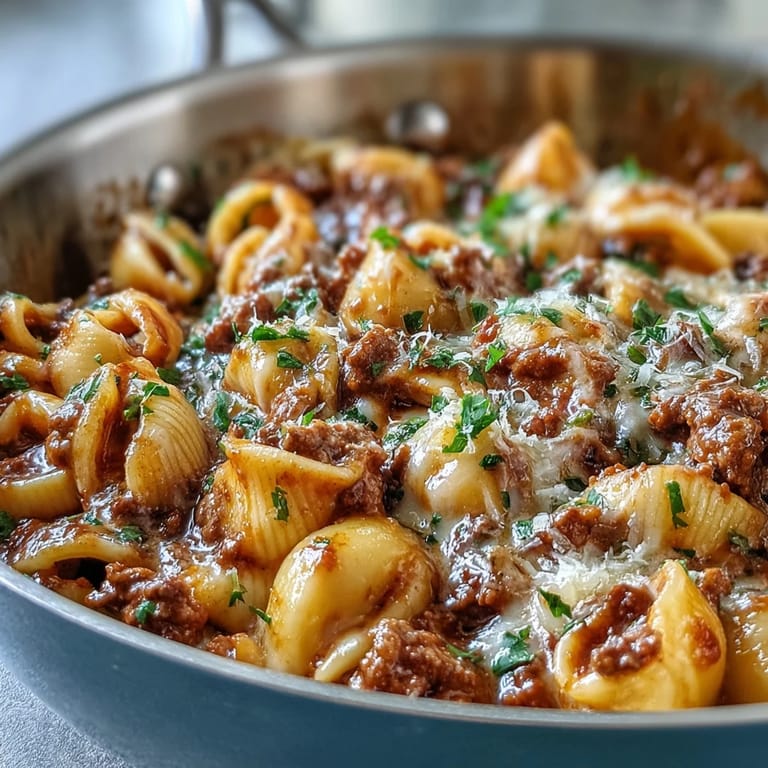
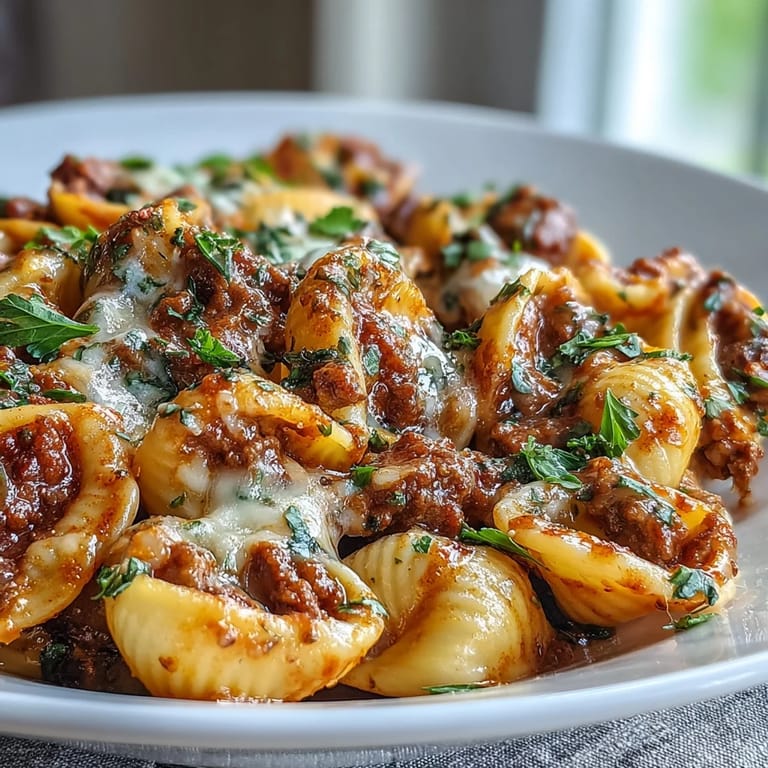
 There's something about a weeknight when everything feels rushed and the fridge isn't exactly overflowing with inspiration. My sister called asking what to make for her kids, and I found myself describing this one-pot wonder without thinking twice—a dish I'd landed on almost by accident when I refused to dirty more than one pan. The magic isn't in complexity; it's in how the pasta absorbs all that beefy, tomatoey, creamy goodness right there in the pot, turning what could be chaotic into something genuinely comforting.
I made this for a dinner party once, nervous because I wanted to impress but couldn't spend the whole evening cooking. Watching my friends go back for seconds while barely pausing conversation told me everything I needed to know—this dish works, and it works hard.
Ingredients
- Ground beef (1 lb, 80/20 blend): The 80/20 ratio gives you enough fat to develop real flavor without leaving a grease slick on top; leaner cuts can taste a bit lean and sad in creamy sauces.
- Yellow onion (1 small, finely chopped): Size matters here—too much onion and it overpowers the whole thing, but too little and you lose that sweet, savory backbone.
- Garlic (2 cloves, minced): Those 30 seconds after adding it are crucial; let it get too brown and bitter and you'll taste it in every spoonful.
- Medium pasta shells (8 oz, uncooked): Shells are perfect because they cup and hold the sauce; skip the tiny shapes and you'll be disappointed.
- Beef broth (2 cups): Use the good stuff if you can—store brands work, but quality broth makes a difference you'll actually notice.
- Crushed tomatoes (1 can, 14 oz): One can might seem small, but it's enough to add brightness without making everything taste like tomato soup.
- Heavy cream (1/2 cup): This is what transforms the sauce from good to luxurious; don't skip it or substitute too aggressively.
- Whole milk (1/2 cup): It balances the cream so the dish doesn't become overly rich and heavy.
- Cheddar cheese (1 cup, shredded): Sharp cheddar has more character than mild; block cheese shredded fresh melts better than pre-shredded.
- Parmesan cheese (1/2 cup, grated): The salty nuttiness is what makes people ask for the recipe.
- Italian seasoning (1 tsp): If you have fresh herbs, use them instead, but dried works perfectly fine here.
- Paprika (1/2 tsp): Just enough for warmth and a whisper of smokiness.
- Salt and pepper: Taste as you go because pasta water and broth already contain salt.
- Red pepper flakes (1/4 tsp, optional): A tiny pinch wakes up the cream without making it spicy.
- Fresh parsley (2 tbsp, chopped): The green makes it look intentional rather than just beige on a plate.
Tired of Takeout? 🥡
Get 10 meals you can make faster than delivery arrives. Seriously.
One email. No spam. Unsubscribe anytime.
Instructions
- Brown the beef properly:
- Heat your skillet over medium-high and let the meat sit undisturbed for a minute before breaking it up; this gets you real brown bits, not just gray meat. It takes maybe 5 to 6 minutes total, and the difference between rushed and properly browned is everything.
- Build flavor with aromatics:
- Once the beef is done, add your onion and let it soften—you should be able to smell when the kitchen has shifted from meaty to savory-sweet. That garlic goes in last, just 30 seconds, because garlic burns easier than you'd think and bitter garlic ruins the whole vibe.
- Combine everything and submerge:
- Pour in your broth, tomatoes, and all the dry seasonings, then add your uncooked pasta and stir like you actually mean it, making sure nothing is sitting above the liquid line. The pasta will look drowning and sad for a moment; this is correct.
- Simmer with patience:
- Once you reach a gentle boil, drop the heat to medium-low, cover it, and let it bubble quietly for 12 to 14 minutes. Stir occasionally but don't obsess; you're looking for the pasta to be just tender and most of the liquid to have vanished into the pasta itself.
- Add the cream and melt the cheese:
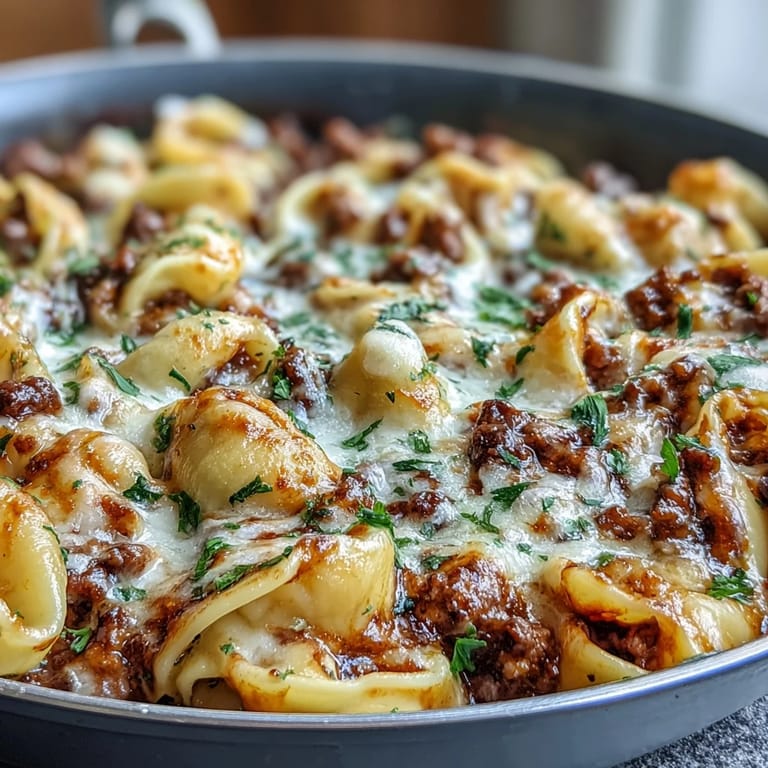
- Pour in your cream and milk, let it simmer uncovered for a couple minutes to thicken, then add both cheeses off heat and stir until it's silky and cohesive. Taste it now—this is when you adjust salt and decide if it needs more of anything.
- Finish and serve:
- A scatter of parsley and a tiny sprinkle of red pepper flakes if you're feeling fancy, then serve while it's hot and the cheese is still glossy.
 Save to Pinterest
 My neighbor knocked on the door once while I was making this, and I invited her in to eat right out of the pot because that's what it deserves—no fuss, no pretense, just honest food that reminds you why cooking for people matters.
Why One Pot Changes Everything
Cooking pasta in the broth instead of separately in salted water means every single strand is drinking in beef and tomato flavor from the start. You're not making pasta and sauce that happen to meet on a plate; you're making a unified dish where the pasta itself tastes better. The starch released from the pasta also thickens the sauce naturally, so you end up with something creamy and clingy without needing extra thickening agents or heavy-handed cream ratios.
Adjusting for What You Have
If heavy cream feels too luxurious, half-and-half or even all milk will work, though the sauce won't be quite as velvety. Ground turkey or chicken swap in seamlessly if beef isn't calling to you that night. A handful of baby spinach stirred in at the end adds green without changing the vibe, and frozen peas work too if that's what's in your freezer.
Serving and Storage Wisdom
Serve it hot from the pot with a simple green salad and some crusty bread to soak up any extra sauce that decides to pool. Leftovers keep for three or four days in the fridge and reheat gently on the stove with a splash of milk if they've gotten too thick.
- Make it the day before if you want the flavors to meld even more deeply together.
- Freeze portions in airtight containers for up to two months, though cream-based sauces can separate slightly when thawed.
- If you're feeding a crowd, double the recipe and use a Dutch oven; everything scales perfectly.
 Save to Pinterest
 This is the kind of dish that doesn't ask for much but delivers comfort in the most genuine way. Once you make it, it becomes part of your rotation, the one you reach for when you need dinner and your people at the table, without apology.
Recipe FAQs
- → Can I use different pasta shapes?
Yes, medium shells work well because they catch the sauce, but you can substitute with rotini, penne, macaroni, or fusilli. Adjust cooking time slightly if using smaller or larger pasta shapes.
- → Is it necessary to drain the beef fat?
It depends on your preference and the beef's fat content. With 80/20 ground beef, draining some excess fat helps prevent the dish from becoming too greasy, though a little fat adds flavor to the sauce.
- → Can I make this ahead?
This dish is best enjoyed fresh as the pasta continues to absorb liquid and may become mushy when reheated. If meal prepping, store the beef mixture separately and cook fresh pasta when ready to serve.
- → What can I substitute for heavy cream?
Half-and-half, whole milk, or evaporated milk work as lighter alternatives. The sauce won't be quite as rich, but it will still be creamy and satisfying.
- → How do I prevent the pasta from sticking?
Stir occasionally during simmering to ensure even cooking and prevent sticking. The liquid should mostly cover the pasta—if it seems too dry, add a splash more broth or water.
- → Can I make it spicy?
Absolutely. Increase the crushed red pepper flakes to 1/2 teaspoon or add a diced jalapeño with the onions. A dash of hot sauce or cayenne pepper also works well.