 Save to Pinterest
 The first time I attempted gumbo, I stood over that roux for twenty minutes straight, arm aching, convinced I'd ruined it when it turned from peanut butter to milk chocolate to that terrifying dark brown. My Cajun neighbor later laughed and told me that's exactly when it starts getting good. Now I can't imagine making it any other way that deep, nutty flavor is everything.
Last winter during a snowstorm that had everyone stuck inside for days, I made a massive pot of this gumbo. My neighbor texted she'd smelled the holy trinity cooking through the walls, and suddenly we had an impromptu dinner party that lasted until midnight.
Ingredients
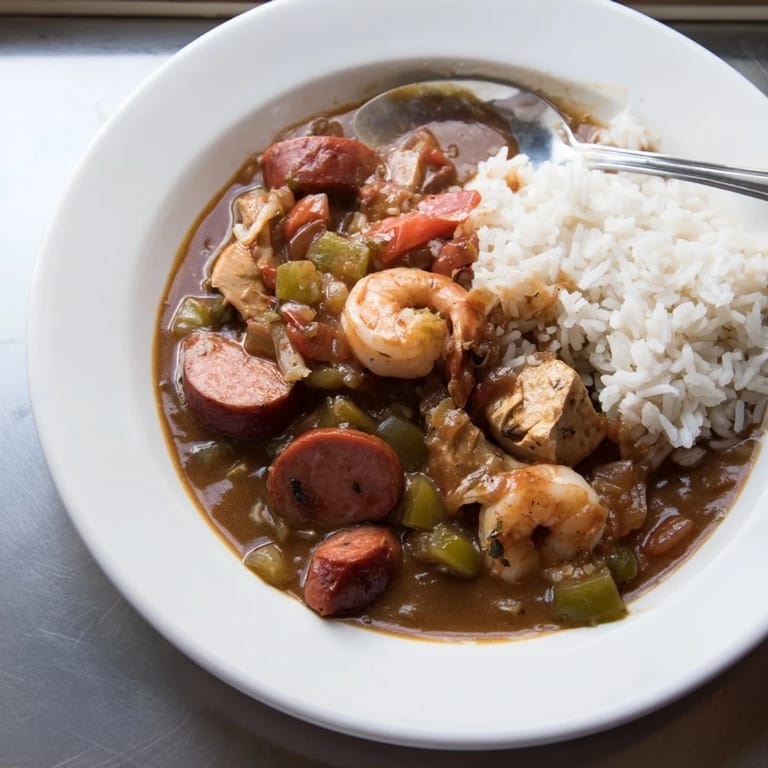
- Andouille sausage: This smoked pork sausage brings the essential Cajun fire and depth that defines authentic gumbo
- Boneless chicken thighs: Dark meat stays tender through long simmering and won't dry out like breast meat might
- Medium shrimp: Add these at the very end so they stay plump and don't become rubbery from overcooking
- Onion, bell pepper, and celery: This holy trinity forms the aromatic backbone of Creole and Cajun cooking
- Garlic cloves: Fresh minced garlic adds that essential background warmth
- Diced tomatoes: They add subtle sweetness and body to the broth
- Vegetable oil: A neutral oil that can handle high heat without burning during roux making
- All purpose flour: Combined with oil this creates the thickening base that gives gumbo its signature texture
- Chicken or seafood stock: Use homemade if you can but a good quality store bought version works perfectly
- Bay leaves: These add subtle herbal notes while the gumbo simmers
- Dried thyme: Earthy and floral it complements the smoked paprika beautifully
- Smoked paprika: This adds incredible depth and that gorgeous reddish brown color
- Cayenne pepper: Start with half a teaspoon and adjust the heat to your comfort level
- Worcestershire sauce: The secret ingredient for umami richness that balances the spicy elements
- Hot sauce: A bottle on the table lets everyone customize their own heat level
- Cooked white rice: Fluffy long grain rice is the classic bed for all that glorious gumbo
- File powder: Ground sassafras leaves add a unique thickenng power and subtle herbal finish
Tired of Takeout? 🥡
Get 10 meals you can make faster than delivery arrives. Seriously.
One email. No spam. Unsubscribe anytime.
Instructions
- Prep your mise en place:
- Chop all vegetables slice your sausage and cube the chicken before you turn on the stove because once that roux starts cooking you won't have a free hand
- Make the dark roux:
- Heat oil in your heavy pot then gradually whisk in flour and stir constantly for 15 to 20 minutes until it reaches deep chocolate brown color this patience creates the foundation of flavor
- Add the holy trinity:
- Toss in your onion bell pepper and celery and cook for about 5 minutes until softened and fragrant stirring frequently
- Bloom the garlic:
- Stir in the minced garlic for just one minute until fragrant but not burnt
- Brown the proteins:
- Add the sausage and chicken pieces and sauté for 5 minutes until lightly browned on all sides
- Build the flavor base:
- Stir in the tomatoes bay leaves thyme paprika cayenne salt and black pepper until everything is well coated
- Add the liquid:
- Gradually pour in the stock while stirring to combine then bring to a boil before reducing to low
- Simmer and develop:
- Let everything simmer uncovered for 45 minutes stirring occasionally until the gumbo has thickened and the chicken is tender
- Add the shrimp:
- If using seafood drop in the shrimp during the final 10 minutes and cook just until pink and opaque
- Finish with sauce:
- Stir in the Worcestershire and hot sauce then taste and adjust your seasoning as needed
- Serve it up:
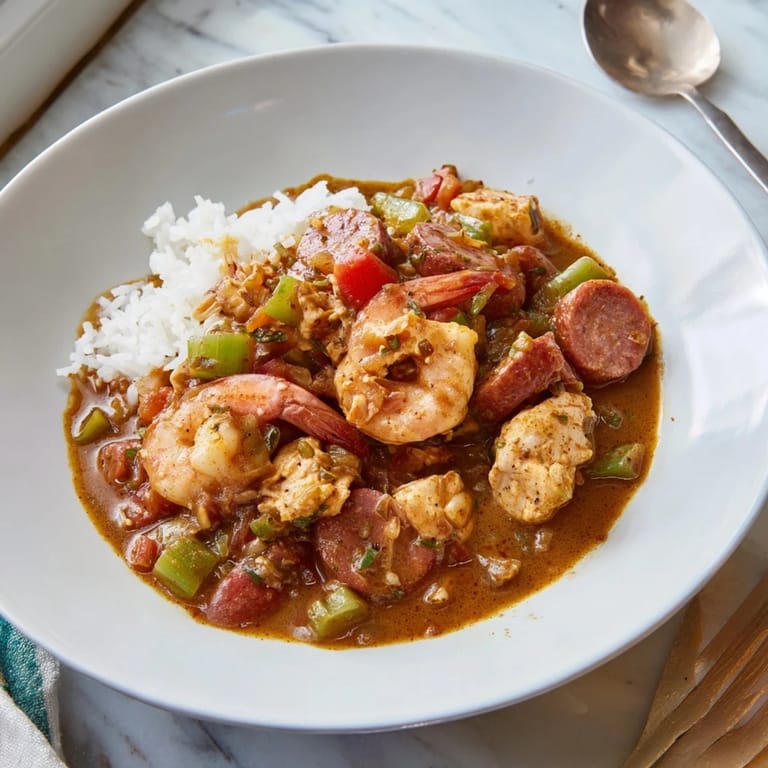
- Ladle that hot gumbo over fluffy rice and top with scallions and parsley with file powder on the table for those who want it
 Save to Pinterest
 My dad swears the best gumbo he ever ate was at a tiny roadside shack outside New Orleans where the cook told him the secret was letting the roux go darker than most people dared. I finally understood what he meant when I tasted that nutty almost chocolate like depth in my own pot.
The Art of Roux Making
Making a proper dark roux is equal parts patience and nerve. The color stages go from white to blonde to peanut butter to milk chocolate and finally that deep mahogany brown you're after. Keep the heat at medium and never stop whisking not even for a second.
Seafood Variations
While chicken and andouille make a fantastic gumbo there's something magical about a seafood version packed with shrimp crab and oysters. The cooking time stays the same but you'll want to use seafood stock and add delicate shellfish only in those final minutes.
Make It Ahead
Gumbo is one of those rare dishes that improves with time. Make it a day ahead and refrigerate overnight or freeze individual portions for those busy weeknights when you need something soulful without the effort.
- Let the gumbo cool completely before refrigerating to prevent bacterial growth
- Reheat gently over low heat adding a splash of water or stock if it's too thick
- Never reheat gumbo more than once to maintain food safety and quality
 Save to Pinterest
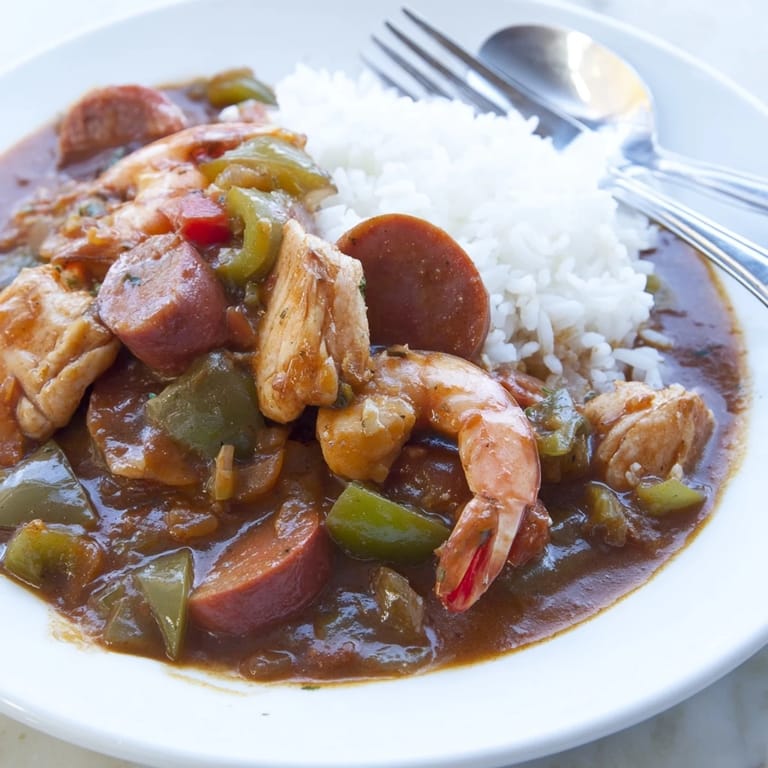
 There's something profoundly satisfying about ladling a steaming bowl of gumbo over rice knowing you've mastered a dish that's fed families for generations. Grab a spoon and dig in.
Recipe FAQs
- → What is the purpose of the roux in this stew?
The roux acts as a thickening agent, providing a rich, nutty base that deepens the stew's flavor and creates a silky texture.
- → Can I substitute chicken stock with seafood stock?
Yes, using seafood stock enhances the stew's briny notes, especially when including shrimp or other seafood.
- → How long should the roux be cooked for the best flavor?
Cook the roux for 15–20 minutes, stirring constantly until it reaches a deep chocolate brown, which develops a complex, toasted flavor without burning.
- → Is it necessary to add filé powder?
Filé powder is optional but adds traditional thickness and a subtle earthy flavor when stirred in at the end of cooking.
- → What vegetables are essential in this stew's base?
The combination of onion, green bell pepper, and celery—often called the holy trinity—is essential for building the stew's aromatic foundation.