 Save to Pinterest
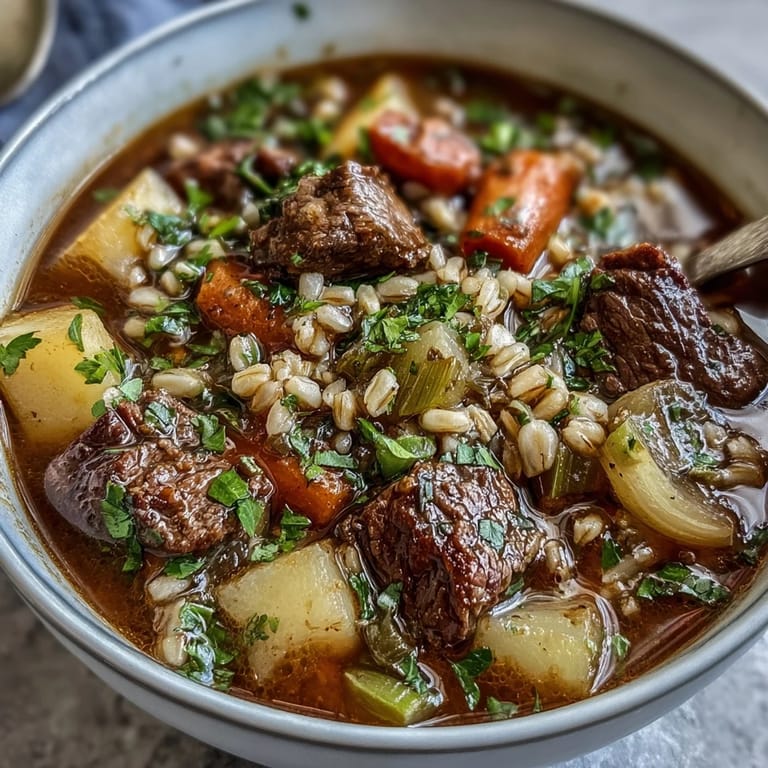
 There's something about opening your refrigerator on a cold afternoon and deciding the day calls for beef and barley soup. I didn't grow up with this particular recipe, but I stumbled into it one November when my neighbor mentioned hers could simmer while she worked, filling her whole house with this impossible, warm aroma. She was right, and now whenever the weather shifts toward gray skies, I find myself reaching for beef and barley without much thinking.
My sister brought a thermos of this to my parent's house one winter and my dad, who usually doesn't compliment food, had two bowls before asking for the recipe. He never made it, but he'd mention it sometimes, which told me everything about how this soup lands with people.
Ingredients
- Beef stew meat (1 lb, cut into 1-inch cubes): Use pieces that are roughly the same size so they cook evenly, and don't skip the browning step even though it feels like extra work.
- Pearl barley (3/4 cup, rinsed): Rinsing removes the starch and prevents the soup from becoming gluey, something I learned after making it once without rinsing.
- Carrots (2 medium, peeled and diced): The sweetness balances the savory beef and thickens the broth naturally as they break down.
- Celery stalks (2, diced): This is the quiet flavor that people taste but don't always identify, adding depth without announcing itself.
- Onion (1 large, chopped): Caramelize it slightly before adding the broth so the soup has a more rounded flavor foundation.
- Garlic (2 cloves, minced): Add it right after the vegetables soften so it becomes fragrant without turning bitter.
- Potatoes (1 cup, peeled and diced): They soften into the broth and thicken it gently, making the soup feel more substantial.
- Mushrooms (1 cup, sliced): They add an earthy richness that makes people think you spent more time cooking than you actually did.
- Frozen peas (1 cup): Add these near the end so they keep their color and don't turn mushy.
- Diced tomatoes (1 can, 14 oz, drained and optional): They brighten the broth and add a subtle acidity that makes all the other flavors pop.
- Beef broth (8 cups): Use good quality broth because it's the foundation, and a weak one will make the whole soup feel tired.
- Bay leaves (2): They should be removed before serving, but they work quietly to layer the flavor.
- Dried thyme (1 tsp): This herb ties everything together and tastes like comfort.
- Dried parsley (1 tsp): A small flourish that reminds you this is intentional cooking, not just survival.
- Salt and freshly ground black pepper: Taste as you go and adjust at the very end when you can see what the soup actually needs.
- Olive oil (2 tbsp): Use something that can handle the heat without smoking, and don't be shy about it.
Tired of Takeout? 🥡
Get 10 meals you can make faster than delivery arrives. Seriously.
One email. No spam. Unsubscribe anytime.
Instructions
- Brown the beef:
- Heat olive oil in a large pot over medium-high heat until it shimmers, then add the beef cubes in a single layer and let them sit for a minute before stirring. You'll hear a satisfying sizzle, and after about 5 minutes, the meat should be dark on all sides.
- Sauté the vegetables:
- Without washing the pot, add the onions, carrots, celery, and mushrooms to the same browned bits and stir occasionally for about 5 minutes until they soften and release their liquid. The kitchen should smell incredible at this point.
- Add the garlic:
- Stir in the minced garlic and cook for just 1 minute, stirring constantly so it doesn't brown and turn bitter. You'll notice the smell shift to something more pungent and alive.
- Build the broth:
- Return the beef to the pot and add the potatoes, barley, tomatoes if you're using them, beef broth, bay leaves, thyme, and parsley all at once. The pot will suddenly be fuller and richer looking.
- Simmer low and slow:
- Bring everything to a boil, then immediately reduce the heat to low, cover it, and let it bubble gently for 1 hour, stirring occasionally so nothing sticks to the bottom. The barley will start to swell and the beef will become tender.
- Finish with peas:
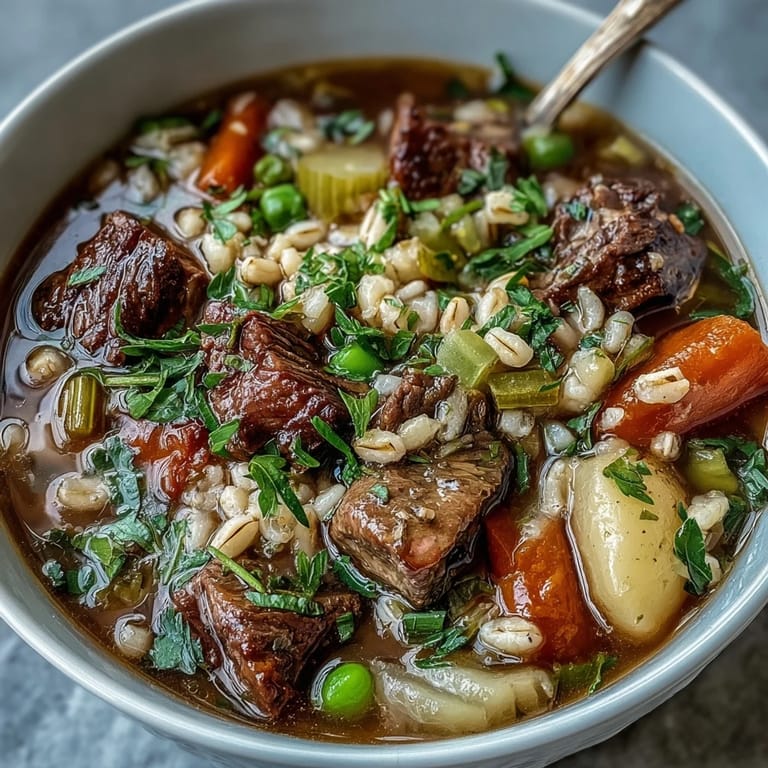
- After 1 hour, add the peas, taste the soup, and season with salt and pepper to your preference, then simmer uncovered for another 20 to 30 minutes. The barley should be tender but not falling apart, and the beef should shred easily under your spoon.
- Serve:
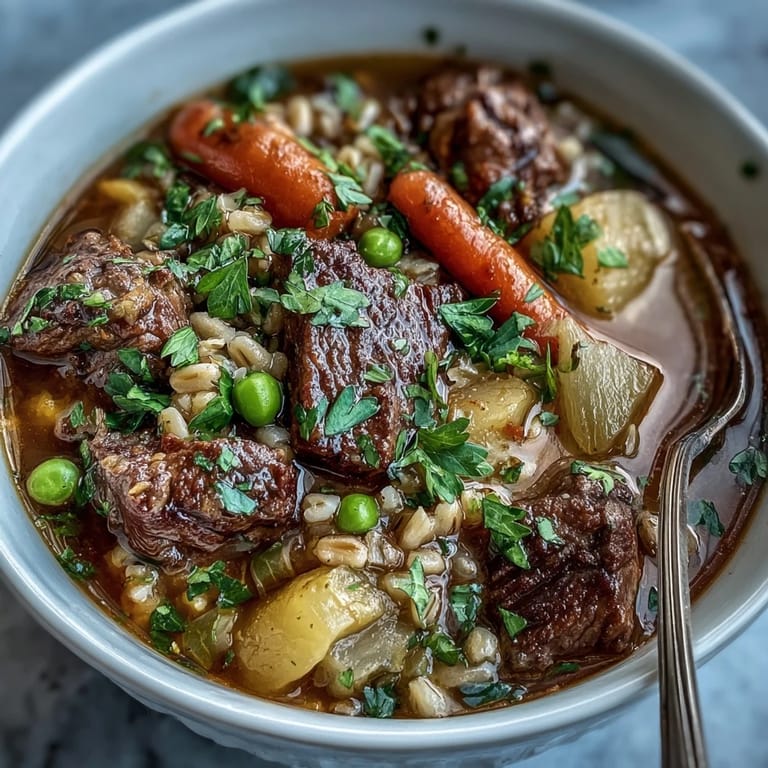
- Remove the bay leaves before ladling the soup into bowls, and taste one more time to make sure the seasoning feels right. Serve it hot with crusty bread.
 Save to Pinterest
 My colleague mentioned once that she made this soup for her father right after his surgery, when he could barely taste anything, and he asked for seconds. That's when I realized this isn't just a recipe, it's the kind of dish that sits with people.
The Barley Makes All the Difference
Barley is what separates this from just being beef vegetable soup. It absorbs all the flavors while cooking, becomes tender and slightly chewy, and adds a subtle nutty note that makes people pause and wonder what you did differently. Most of my friends don't cook with barley because they've never thought to, which means when they taste it here, it feels like a small discovery. I always buy pearl barley instead of hulled because it's quicker and the soup doesn't need to simmer for three hours.
How to Make It Your Own
This soup is flexible enough that you can adjust it based on what's in your vegetable drawer and what kind of mood you're in. I've added parsnips, turnips, green beans, and even kale depending on the season and what looked good at the market. The core of beef, barley, and broth stays the same, but everything else can shift. One time I added a splash of red wine at the end, and it gave the whole pot a deeper complexity that lingered in people's memories.
Storage and Make-Ahead Magic
This soup is one of the few dishes that genuinely tastes better after sitting in your refrigerator overnight, as if the flavors needed time to fully commit to each other. You can store it for up to 4 days in the refrigerator, and it freezes beautifully for 3 months, which makes it perfect for cooking on a weekend and having something ready when you come home tired. Just remember that barley thickens the soup over time, so when you reheat it, add a splash of broth or water to get it back to the right texture.
- Cool the soup completely before refrigerating or freezing so condensation doesn't make it watery.
- Reheat gently on the stovetop instead of the microwave to keep the vegetables from turning mushy.
- Add fresh herbs like parsley or chives right before serving to brighten the flavors again.
 Save to Pinterest
 This soup has become the thing I make when I want to feel like I'm taking care of people, including myself. It's simple enough that you won't dread making it, but thoughtful enough that everyone knows you were paying attention.
Recipe FAQs
- → Can I use quick-cooking barley instead of pearl barley?
Yes, but reduce the cooking time by about 20-30 minutes. Quick-cooking barley becomes tender faster and may turn mushy if overcooked. Add it later in the cooking process for best results.
- → What cuts of beef work best for this soup?
Chuck roast, round, or stew meat are ideal choices. These cuts contain enough marbling to stay tender during long simmering. Trim excess fat before cutting into cubes for a cleaner broth.
- → How can I make this in a slow cooker?
Brown the beef and sauté vegetables as directed, then transfer everything to a slow cooker. Cook on low for 6-8 hours or high for 4-5 hours. Add peas during the last 30 minutes of cooking.
- → Why is my barley still hard after cooking?
Barley needs adequate liquid and time to soften. Ensure there's enough broth covering the ingredients and simmer for the full cooking time. Old barley takes longer to cook, so check the package date.
- → Can I make this soup ahead of time?
Absolutely. This soup tastes even better the next day as flavors meld together. Store in the refrigerator for up to 4 days or freeze for up to 3 months. The barley may absorb liquid during storage, so add extra broth when reheating.
- → What vegetables can I substitute or add?
Try parsnips, turnips, green beans, or butternut squash. Root vegetables work particularly well. Add heartier vegetables at the beginning with the carrots, and delicate ones like peas toward the end.