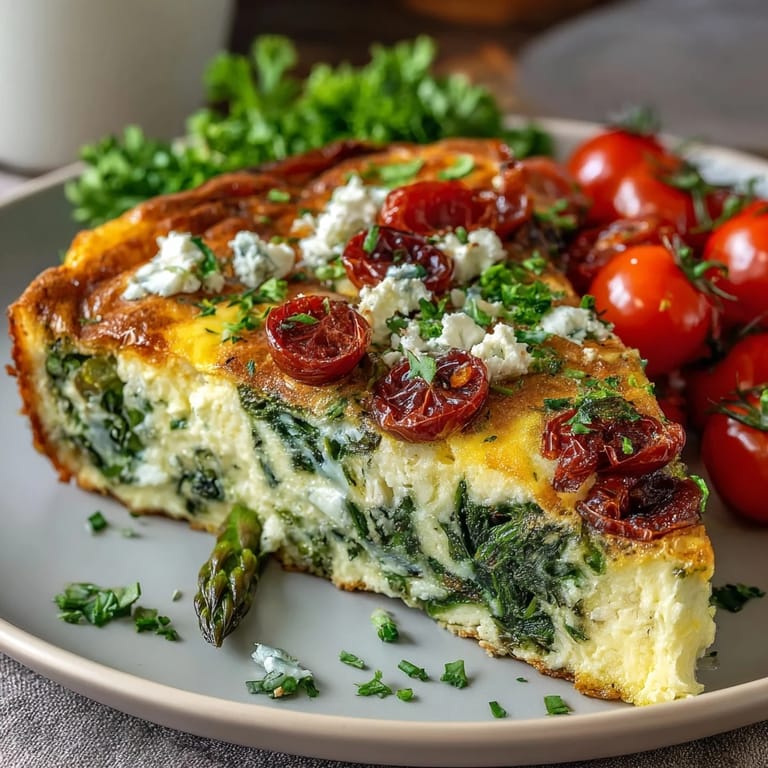
 Save to Pinterest
 Last spring, my neighbor knocked on my kitchen door holding a bundle of asparagus so fresh the tips were still dewy, asking if I knew what to do with it. I'd been staring at my fridge that morning, uninspired by the usual breakfast routine, when those spears arrived like an invitation to cook something better. That afternoon, I threw together this frittata—eggs, goat cheese, whatever vegetables looked promising—and discovered that sometimes the best meals come together when you stop overthinking and just start cooking with what feels right.
I made this for my sister on Easter morning, and watching her face when she bit into that creamy goat cheese mixed with the tender asparagus told me everything I needed to know. She asked for the recipe before she'd even finished her slice, and now whenever she visits, this is what she requests. There's something about a homemade frittata that says I took time to think about feeding you well.
Ingredients
- Asparagus: Trimmed and cut into 1-inch pieces—the tender tips cook faster than the woody ends, so cutting them uniform ensures everything finishes at the same time.
- Baby spinach: Roughly chopped and added near the end so it wilts without turning dark and bitter.
- Zucchini: Diced small enough to cook through in minutes; larger pieces stay watery and throw off the whole balance.
- Cherry tomatoes: Halved so they release their bright acidity without overwhelming the delicate eggs.
- Green onions: Sliced, with both white and green parts—they add a mild onion flavor that doesn't compete with the goat cheese.
- Large eggs: Eight eggs create that fluffy, custardy texture that makes a frittata feel almost indulgent.
- Whole milk or cream: A quarter cup loosens the egg mixture slightly and helps it stay tender as it bakes.
- Goat cheese: Crumbled into 4-ounce pieces, it melts into creamy pockets that taste like a flavor revelation in each bite.
- Parmesan cheese: Grated fresh from a block, not the pre-shredded kind—it gives you better melting and a sharper, more authentic taste.
- Fresh chives and parsley: Chopped just before serving so they stay bright and vibrant, not darkened by sitting around.
- Salt and freshly ground black pepper: Season generously; eggs need more seasoning than you'd expect to taste truly alive.
- Olive oil: Two tablespoons is enough to coat the skillet and carry flavor without making the frittata greasy.
Tired of Takeout? 🥡
Get 10 meals you can make faster than delivery arrives. Seriously.
One email. No spam. Unsubscribe anytime.
Instructions
- Warm your oven:
- Set it to 375°F (190°C) and let it preheat fully while you prep your vegetables; a properly heated oven is what gives the frittata that puffed, light finish.
- Sauté the heartier vegetables:
- Heat olive oil in your oven-safe skillet over medium heat, then add asparagus and zucchini, cooking for 3 to 4 minutes until they soften just slightly but still hold their shape. You'll know they're ready when a fork slides through with gentle pressure.
- Wilt the tender greens:
- Stir in spinach, cherry tomatoes, and green onions, cooking for about 2 minutes until the spinach loses its rawness and the tomatoes warm through. The skillet will smell incredible at this point—lean in and breathe that in.
- Prepare your egg base:
- In a separate bowl, whisk together eggs, milk, salt, and pepper until the mixture is pale and slightly frothy, which means the eggs are fully incorporated and ready to puff in the oven.
- Combine everything:
- Pour the whisked egg mixture evenly over the vegetables in the skillet, then scatter crumbled goat cheese, grated Parmesan, chives, and parsley across the top, letting them sit right on the surface where they'll toast slightly.
- Set the edges on the stovetop:
- Cook over medium heat for 3 to 4 minutes without stirring, just watching the edges begin to set and curl up slightly from the skillet; this gives you a better texture than jumping straight to the oven.
- Finish in the oven:
- Transfer the skillet carefully to your preheated oven and bake for 12 to 15 minutes, until the center is just set and the top has puffed slightly, which signals the eggs have cooked through but stayed tender. The frittata will look almost done before it's fully done, so resist the urge to pull it out early.
- Rest and slice:
- Let the frittata cool for 5 minutes—this sounds like nothing, but it gives the structure time to set so it holds together when you slice it rather than falling apart on the spatula.
 Save to Pinterest
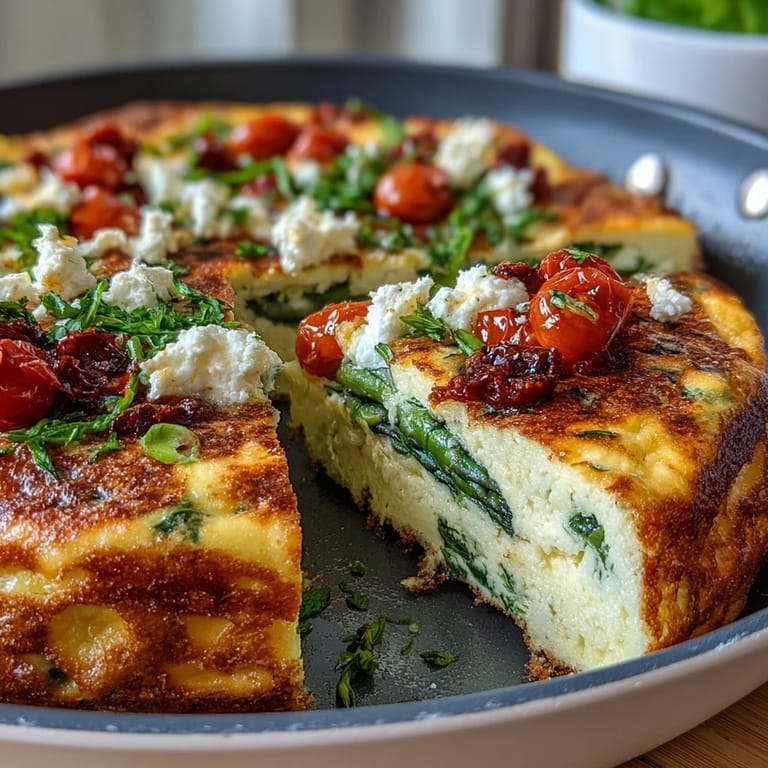
 There's a quiet satisfaction that comes with pulling a golden, puffy frittata from the oven—something about the sizzle and the aroma that fills your kitchen makes even a simple dish feel like an accomplishment. When I serve this to people, they're always surprised by how something so straightforward tastes like you spent hours planning it.
Why Spring Vegetables Matter Here
Spring vegetables have a delicate sweetness and tender texture that stands up beautifully to gentle cooking rather than aggressive heat. The asparagus stays slightly crisp, the zucchini softens without becoming mushy, and the tomatoes warm through without losing their bright flavor—together, they create layers of taste that feel fresh and alive. This is why I avoid heavy winter vegetables for this recipe; they'd overwhelm the eggs and goat cheese, turning something light into something dense.
The Oven-Safe Skillet Secret
I learned the hard way that a non-oven-safe skillet with a plastic handle is a path to kitchen disaster, so invest in a proper cast iron or stainless steel pan if you don't already have one. The skillet matters because you're cooking on the stovetop first, then moving directly to the oven without any fussing or transfers—this seamless transition is what keeps the frittata from deflating or cooling down partway through. If you only have a regular skillet, you can transfer the partially cooked mixture to a baking dish, but you'll lose some of that beautiful golden crust on the bottom.
Customizing Your Frittata
The beauty of a frittata is that it adapts to whatever you have on hand or whatever looks good at the market that day. One week I swapped in fresh peas and dill, another time I used artichoke hearts and roasted red peppers, and both times the dish felt entirely different yet equally delicious. The formula stays the same—8 eggs, a quarter cup of milk, about 2 cups of vegetables, 4 ounces of cheese—but your mood and the season decide what goes inside.
- Spring peas and fresh mint create an herbaceous, almost garden-fresh flavor that feels lighter than air.
- Roasted red peppers and feta bring Mediterranean warmth and a slight briny note that pairs beautifully with fresh basil.
- Sun-dried tomatoes and ricotta make the frittata richer and slightly more rustic than the goat cheese version.
 Save to Pinterest
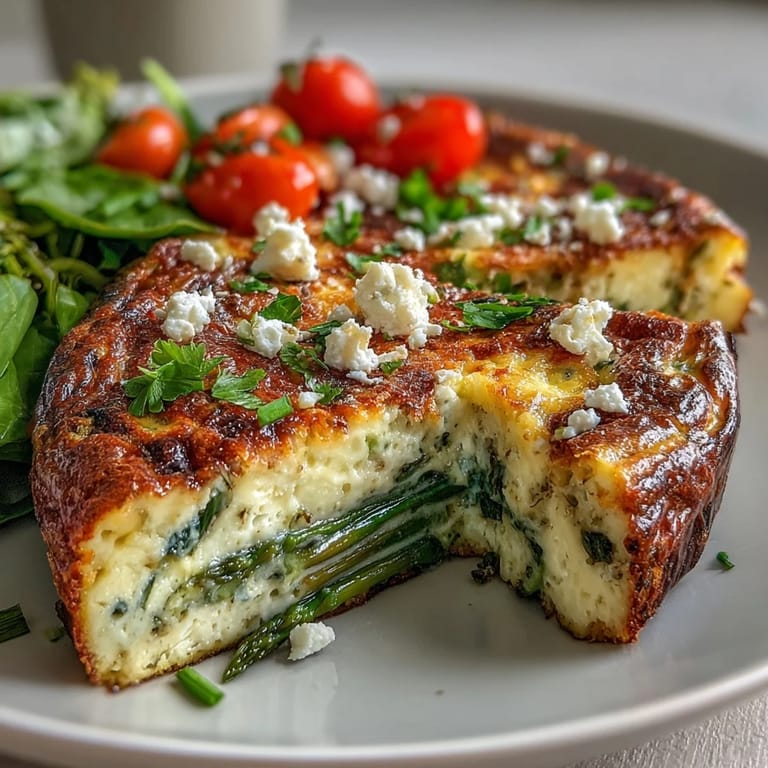
 This frittata has become my answer to the question of what to make when you want something that feels special but doesn't demand hours of your time. It's flexible enough to use what you have, beautiful enough to serve to people you want to impress, and honest enough to feel like you made it with care.
Recipe FAQs
- → Can I use other vegetables instead of asparagus?
Yes, spring vegetables like peas or artichokes work well and can be swapped based on preference and seasonality.
- → What is the best way to cook the veggies before baking?
Sauté asparagus and zucchini until just tender, then add spinach and tomatoes to soften slightly, ensuring even cooking and vibrant flavors.
- → How do I prevent the dish from drying out?
Use a combination of milk or cream with eggs and avoid overbaking to keep the texture soft and moist.
- → Can I prepare this dish ahead of time?
You can prepare the vegetable mixture in advance and assemble just before cooking to maintain freshness and texture.
- → What cheese alternatives can be used?
Try swapping goat cheese for feta or omit cheese for dairy-free versions, using plant-based milk instead of cream.