 Save to Pinterest
 One summer afternoon, my neighbor arrived at my door with a basket of overripe vegetables from her garden—bell peppers that had turned almost translucent in the heat, zucchini the size of small clubs, eggplant dark as midnight. Rather than let them fade, I roasted them until their edges caramelized into sweet, almost burnt corners, then tossed them with cool cucumber and briny olives. That single moment taught me that salad doesn't have to be cold to feel refreshing, and sometimes the best dishes come from urgency rather than planning.
I once made this for a dinner party where someone claimed they didn't like eggplant, then came back for thirds without realizing what they were eating. That's the magic of roasting—it coaxes out a sweetness and tenderness that even skeptics can't resist, and the feta melts slightly into the warm vegetables, creating pockets of creamy, salty goodness throughout.
Ingredients
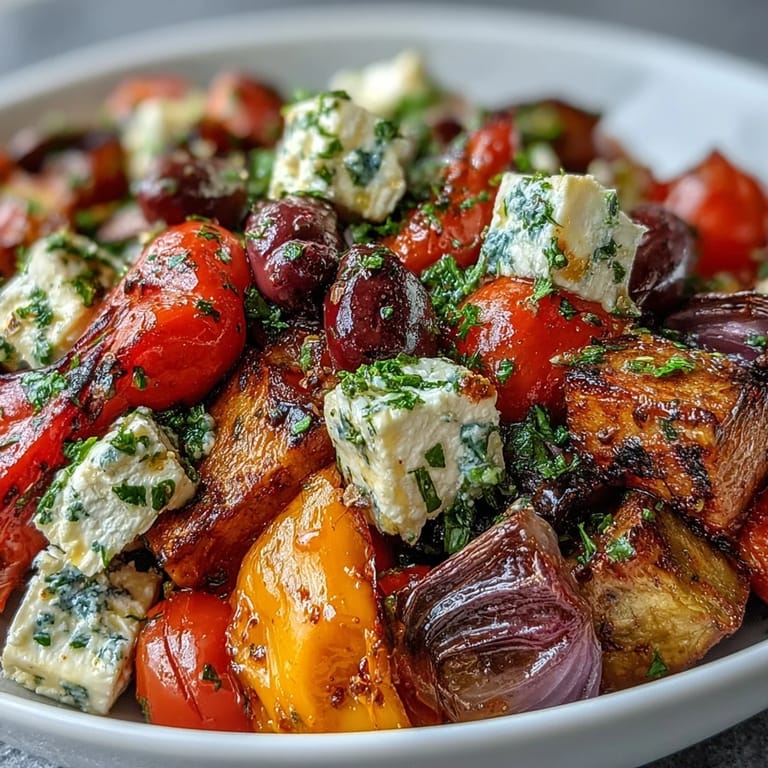
- Red and yellow bell peppers: Their natural sugars concentrate when roasted, creating caramelized edges that taste almost candied—cut them into generous pieces so they hold their shape.
- Red onion: Cut into wedges rather than thin slices so they stay intact and develop charred, sweet layers instead of falling apart.
- Zucchini and eggplant: These are the backbone that absorbs all that roasted flavor; eggplant can handle higher heat without collapsing if your pieces are roughly the same size.
- Cherry tomatoes: Halving them lets them roast quickly and burst slightly, releasing their juice into the pan.
- Extra-virgin olive oil: Use your good oil for both roasting and the dressing—this isn't the place to skimp.
- Kalamata olives: The briny anchor that cuts through richness; pit them yourself if you can, as pre-pitted sometimes taste a bit tired.
- Feta cheese: Crumbly or cubed, it should be fresh and creamy, not dense or overly salty.
- Lemon juice and red wine vinegar: Together they create brightness that wakes up the warm vegetables without needing any added salt initially.
- Dried oregano: The defining Greek flavor that ties everything together—don't skip it or substitute fresh here, as dried oregano's intensity is what you need.
Tired of Takeout? 🥡
Get 10 meals you can make faster than delivery arrives. Seriously.
One email. No spam. Unsubscribe anytime.
Instructions
- Heat your oven and prepare for success:
- Preheat to 220°C (425°F) and line your baking sheet with parchment paper so nothing sticks and cleanup becomes almost pleasant. This temperature is hot enough to create caramelization without drying vegetables out.
- Build the roasting foundation:
- Toss all your cut vegetables—peppers, onion, zucchini, eggplant, and tomatoes—with olive oil, sea salt, and pepper until every piece glistens. The salt won't draw out moisture here; it'll help seasoning penetrate as they roast.
- Let them roast with intention:
- Spread everything in a single layer and roast for 25–30 minutes, stirring halfway through so the edges get their turn at the hot pan. You're looking for vegetables that are tender when pierced with a fork and have at least a few caramelized spots—that's where the deep flavor lives.
- Build your dressing while vegetables cook:
- Whisk together olive oil, red wine vinegar, lemon juice, oregano, Dijon mustard, and grated garlic in a small bowl until the mustard helps emulsify everything together. This isn't a vinaigrette that breaks apart; it should feel cohesive and slightly glossy.
- Lay your foundation:
- Arrange cucumber slices on your serving platter or into a large salad bowl, creating a cool base that the warm vegetables will settle onto.
- Assemble with care:
- Top the cucumbers with your still-warm roasted vegetables, then scatter olives and feta across the whole thing so every bite has all the elements. The warmth will soften the feta slightly, which is exactly what you want.
- Dress and finish:
- Drizzle the dressing over everything and garnish generously with fresh parsley, then toss gently so nothing becomes mushy. Serve while the vegetables are still warm, or let it cool to room temperature if that suits your evening better.
 Save to Pinterest
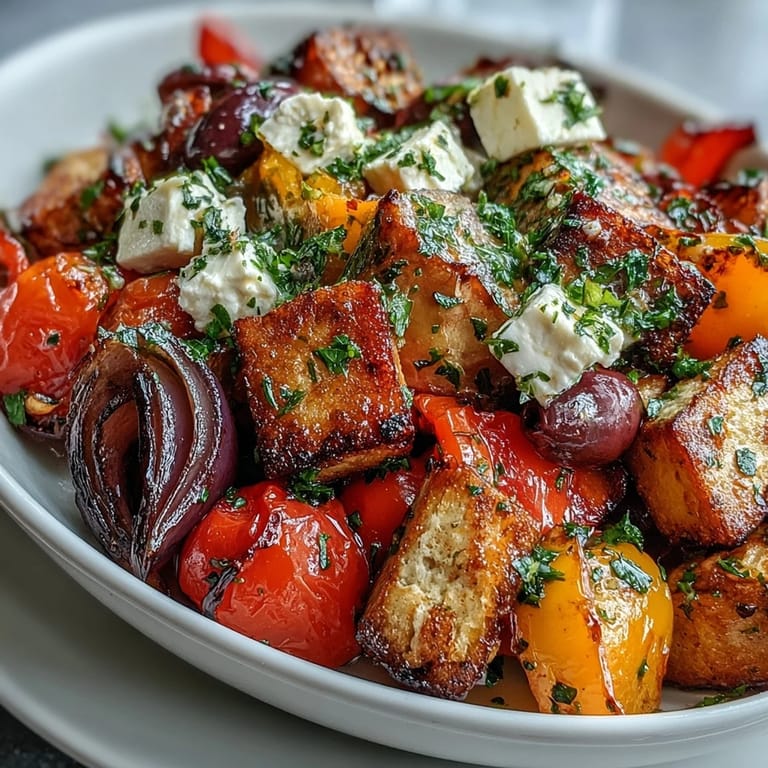
 There's a moment, right when you pull this from the oven, when the smell hits you—something between caramelized sugar and herbs and warm olive oil—and you know you've made something worth sharing. That's when this stops being just a salad and becomes something people will ask you to make again.
The Beauty of Warm Salads
Warm salads exist in this beautiful middle ground where salad feels like a main course instead of a side dish. The heat makes feta more forgiving, the dressing coats vegetables more effectively, and somehow the whole thing feels like dinner rather than something you eat because you're supposed to eat greens. This is the kind of salad that satisfies you completely, especially when served with crusty bread.
Roasting as Flavor Magic
The moment vegetables hit a 220°C oven, their sugars begin breaking down and caramelizing, creating flavors that raw vegetables could never deliver. Eggplant transforms from dense and slightly bitter into something almost sweet and creamy; zucchini becomes tender enough to cut with a fork; even humble bell peppers develop depth. This is why roasted vegetable salads feel luxurious—you're not just eating vegetables, you're eating them at their most delicious.
Timing and Temperature Flexibility
The beauty of this salad is that temperature doesn't matter much—it's equally delicious steaming from the oven or cooled to room temperature, making it forgiving for gatherings where timing gets chaotic. I've made it ahead in the morning and served it at evening potlucks with no regrets; the flavors actually meld more deeply as it sits. You can even reheat individual portions gently if you find yourself eating leftovers days later.
- If serving immediately, assemble while the vegetables are still warm so the feta softens slightly.
- For make-ahead purposes, roast the vegetables and keep them separate from the dressing until ready to serve.
- Room temperature is actually ideal if you're eating this in warm weather, as cold feta can taste a bit muted.
 Save to Pinterest
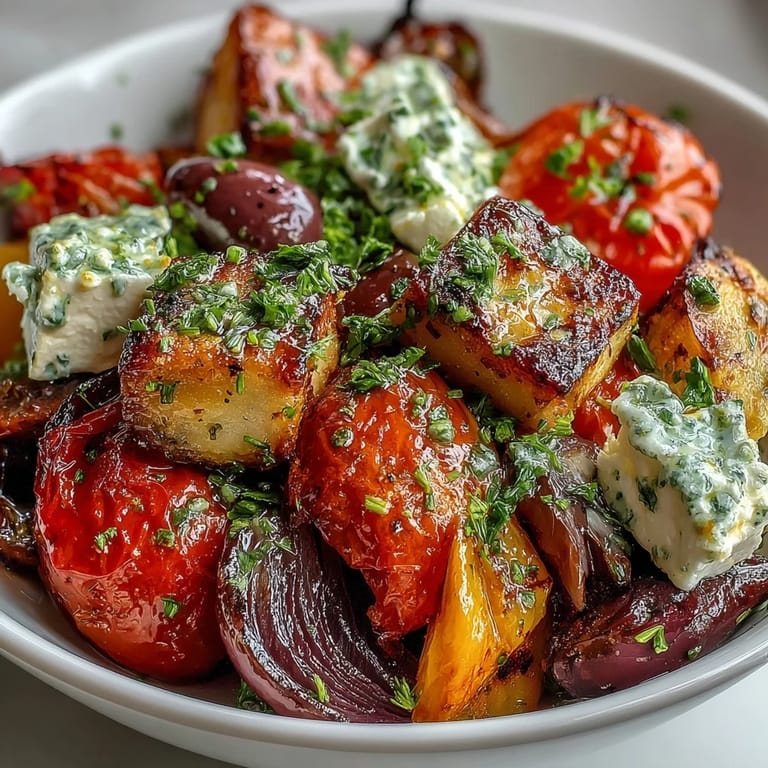
 Make this when you want to serve something that tastes like you spent hours in the kitchen, even though you barely touched a stove. Your guests will understand that you've discovered something worth repeating.
Recipe FAQs
- → Can I make this salad ahead of time?
Yes, you can roast the vegetables up to 2 days in advance and store them in the refrigerator. The dressing can also be prepared separately and kept for up to a week. Assemble everything just before serving for the best texture and flavor.
- → What can I substitute for the eggplant?
You can replace eggplant with mushrooms, roasted potatoes, or additional bell peppers. Portobello mushrooms work particularly well and add a meaty texture to the salad without overwhelming the other Mediterranean flavors.
- → Is this served warm or cold?
This salad is delicious served warm, at room temperature, or chilled. The roasted vegetables are most flavorful when slightly warm, but the salad also holds up well for picnics and lunchboxes when chilled.
- → Can I make this dairy-free?
Yes, simply omit the feta cheese or replace it with a dairy-free alternative. You can add extra olives or capers to maintain the salty, briny element that feta provides to the dish.
- → What vegetables work best for roasting?
Bell peppers, zucchini, eggplant, red onion, and cherry tomatoes are ideal because they hold their shape well and develop natural sweetness when roasted at high heat. Avoid delicate vegetables that might become mushy.
- → How long does the dressing keep?
The lemon-oregano dressing will keep in an airtight container in the refrigerator for up to one week. The olive oil may solidify when cold—simply let it come to room temperature and whisk well before using.