 Save to Pinterest
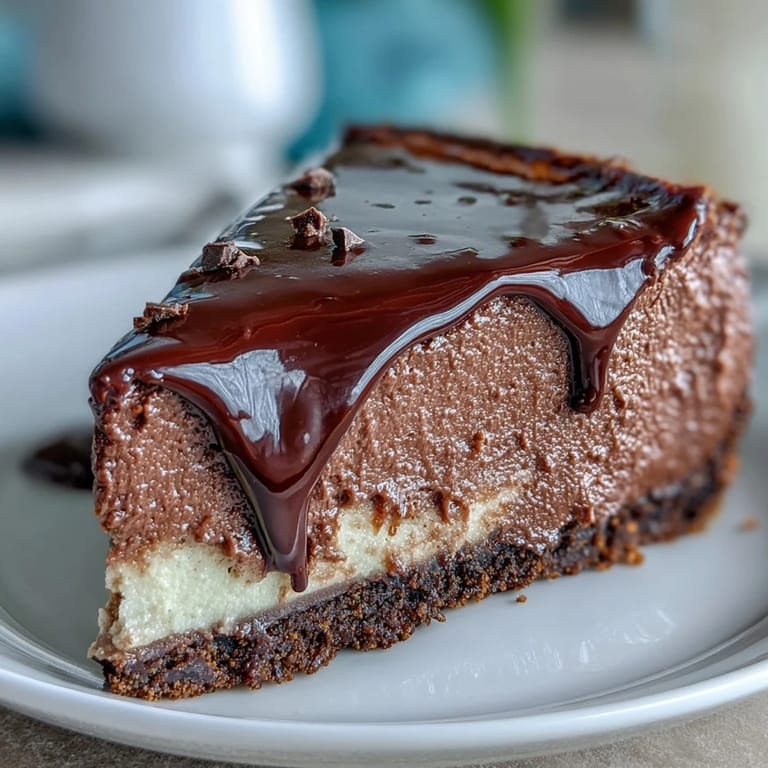
 I discovered this cheesecake entirely by accident when my blender broke mid-smoothie and I was left staring at a carton of cottage cheese wondering what to do with it. That same afternoon, I craved chocolate cheesecake but was tired of the heavy cream cheese versions that left me feeling sluggish. So I did what any curious cook does—I improvised, blending that cottage cheese with Greek yogurt and cocoa powder, and what emerged from the oven hours later shocked me. It was rich, fudgy, and satisfying, but somehow lighter than anything I'd made before.
My friend Sarah came over on a Tuesday evening when I was testing this recipe, and she took one bite, paused, and asked if I'd finally lost my mind making cheesecake on a weeknight. When I told her it was cottage cheese-based, she laughed until I made her read the ingredient list. By dessert time, she was asking for the recipe and wondering aloud why every cheesecake couldn't taste this way.
Ingredients
- Graham cracker crumbs (120 g): The foundation needs that slight sweetness and texture—don't use store-bought crumb dust if you can help it, as it compacts too densely when pressed.
- Coconut oil or melted butter (30 g): This binds everything and keeps the crust from becoming hard as a brick; coconut oil gives a subtle richness that plays beautifully with chocolate.
- Unsweetened cocoa powder (1 tbsp for crust, 50 g for filling): Quality matters here more than anywhere else—taste it first if you can, as some brands taste bitter or stale.
- Maple syrup (1 tbsp): A small amount sweetens the crust without making it grainy, and adds depth that regular sugar can't match.
- Low-fat cottage cheese (500 g): This is your secret weapon, but only if blended completely smooth—any lumps will haunt you, so spend the full 1 to 2 minutes blending.
- Plain Greek yogurt (150 g): Don't skip this; it adds tang that brightens the chocolate and helps keep the texture creamy despite the lower fat content.
- Large eggs (2): They're the binder and structure—room temperature eggs incorporate more smoothly than cold ones straight from the fridge.
- Granulated sugar (100 g): Use what you have, or swap for your preferred sweetener; just taste the batter once to make sure it's sweet enough.
- Vanilla extract (1 tsp): A single teaspoon rounds out the chocolate without announcing itself.
- Cornstarch (1 tbsp): This small amount prevents cracks and helps the center set without becoming rubbery.
- Dark chocolate chips (60 g, melted and cooled): Melting and cooling them prevents the eggs from scrambling, so don't skip that step.
Tired of Takeout? 🥡
Get 10 meals you can make faster than delivery arrives. Seriously.
One email. No spam. Unsubscribe anytime.
Instructions
- Prepare your pan:
- Preheat your oven to 170°C and line your springform pan with parchment paper on the bottom—this makes release effortless and prevents leaks. A 20 cm pan is crucial; anything bigger and your cheesecake spreads thin.
- Build the crust:
- Mix graham cracker crumbs, cocoa powder, coconut oil, and maple syrup until the texture resembles damp sand, then press it firmly and evenly into the pan. Bake for 8 minutes just to set it, which prevents the crust from becoming soggy when the wet filling hits.
- Smooth the cottage cheese:
- This step cannot be rushed—blend your cottage cheese in a food processor or blender for a full 1 to 2 minutes until it's completely lump-free and silky. Any remaining graininess will show up in your finished cheesecake, so take your time here.
- Create the filling:
- Add Greek yogurt, eggs, sugar, cocoa powder, vanilla, cornstarch, and your cooled melted chocolate to the processor and blend until the mixture is smooth and unified, with no streaks of cocoa powder visible. Pour this over your cooled crust and smooth the top with a spatula.
- Bake with patience:
- Bake for 35 to 40 minutes until the center is just set but still has a slight wobble when you gently shake the pan—this wobble is what keeps it creamy. Turn off the oven, crack the door open about 4 inches, and let the cheesecake rest inside for a full hour so it cools gradually and avoids cracking.
- Chill and set:
- Once cooled completely, refrigerate for at least 3 hours, though overnight is even better for flavor development. The cheesecake will firm up and slice cleanly once fully chilled.
- Finish and serve:
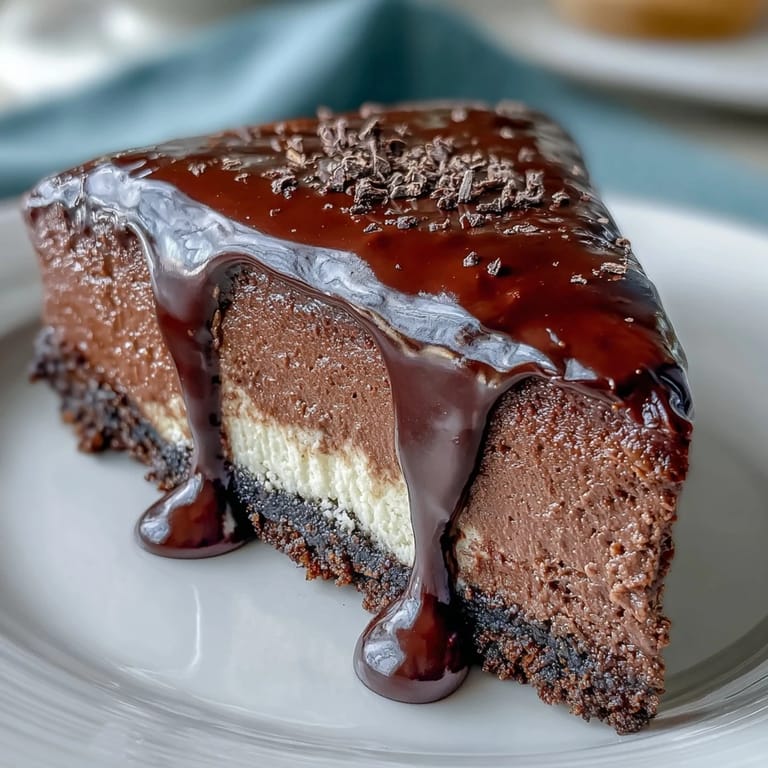
- Before serving, spread a thin layer of Greek yogurt on top if you'd like, and scatter dark chocolate shavings across. A light dusting looks elegant and adds a final note of richness.
 Save to Pinterest
 There's a moment, about three hours into chilling, when you peek into the fridge and realize you've made something that tastes indulgent but won't leave you feeling heavy—and that shift from guilt to genuine joy is worth every careful step. This dessert became the one I make when I want to feel like I'm treating myself without betraying my own choices.
Why Cottage Cheese Works Here
Cottage cheese sounds strange in dessert until you understand that it's mostly casein protein and moisture, with a subtle tang that chocolate loves. Blended smooth, it disappears into the filling and creates a creamy texture that's miles ahead of what you'd get from just Greek yogurt alone. I learned this the hard way by testing a dozen variations, and this particular ratio is what finally made sense.
The Cooling Method Matters
The crack that haunts cheesecake bakers comes from thermal shock—moving from hot oven directly to cold refrigerator. By leaving the oven door cracked and letting it cool for an hour, you're gently bringing the temperature down, and the cheesecake stays whole and beautiful. I once skipped this step thinking I'd save time, and the result looked like a map of fault lines.
Customizing Your Cheesecake
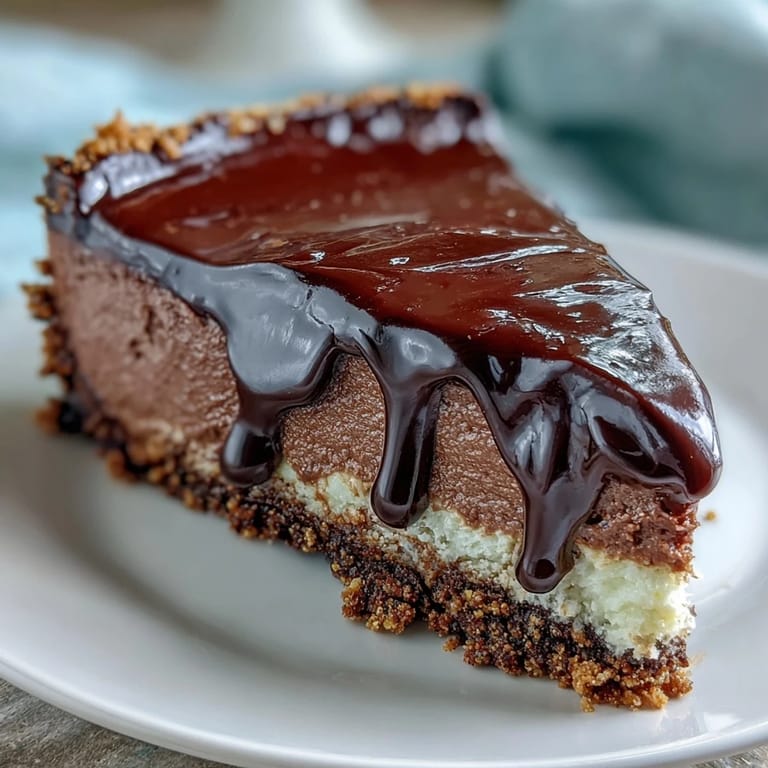
This recipe is sturdy enough to play with once you understand the foundations. Add instant espresso powder to deepen the chocolate, or swirl in some almond butter before baking. The topping is optional, but I've learned that a touch of something creamy and a scatter of dark chocolate shavings transforms it from homey to elegant.
- For gluten-free, swap the graham crackers for gluten-free ones or use almond flour mixed with melted coconut oil.
- Fresh berries on the side brighten each bite and add a pop of tartness that contrasts beautifully with the richness.
- Make it a day ahead so the flavors have time to meld and the texture becomes even creamier.
 Save to Pinterest
 Every time I serve this cheesecake, someone asks if it's actually guilt-free, and I love watching their surprise when they realize it's real chocolate, real richness, and honestly nutritious. That moment when indulgence and wellness collide is what keeps me coming back to this recipe.
Recipe FAQs
- → Why use cottage cheese instead of cream cheese?
Cottage cheese creates a lighter texture while significantly boosting protein content. When blended until completely smooth, it becomes indistinguishable from traditional cheesecake filling but with fewer calories and more nutritional benefits.
- → How do I achieve the smoothest texture?
Blend the cottage cheese in a food processor or blender for at least 1-2 minutes until completely silky before adding other ingredients. This step is crucial for eliminating any graininess and ensuring a luxurious mouthfeel.
- → Can I make this gluten-free?
Absolutely. Simply swap the graham cracker crumbs for gluten-free graham crackers or crushed gluten-free cookies. All other ingredients are naturally gluten-free, making this an easy adaptation.
- → Why cool the cheesecake in the oven with the door cracked?
This gradual cooling method prevents the cheesecake from cracking by reducing thermal shock. The slow temperature transition helps the filling set gently while maintaining a smooth surface without unsightly fissures.
- → How long does this need to chill before serving?
The cheesecake requires at least 3 hours in the refrigerator to fully set and develop the proper texture. For the best results, chill overnight—the flavors meld beautifully and the slicing becomes much cleaner.
- → Can I add mix-ins to the filling?
While the classic version is sublime on its own, you could fold in chopped dark chocolate, raspberries, or a swirl of peanut butter after blending but before baking. Just keep additions minimal to maintain the silky texture.