 Save to Pinterest
 There's something about the smell of onions slowly turning golden in butter that makes a kitchen feel like home, even if you're cooking in a borrowed apartment on a rainy Tuesday. Years ago, I watched a French chef work through a massive pile of onions with such patience, never rushing, just letting time and gentle heat do the magic. That afternoon taught me that the best dishes often ask for nothing more than ingredients you probably already have and the willingness to slow down.
I made this for my grandmother when she was going through a rough winter, and watching her face light up when that melted cheese stretched from her spoon to the bowl reminded me why comfort food matters. She asked me to write down every step, said it was the kind of recipe worth keeping around for when life gets heavy.
Ingredients
- Yellow onions: Use 4 large ones, sliced thin and uniform so they caramelize evenly; this is where patience pays off more than anywhere else in the recipe.
- Leeks and shallots: These two bring sweetness and nuance that plain onions can't quite deliver on their own.
- Garlic cloves: Just 3, minced fine, added near the end of caramelization so they don't burn and turn bitter.
- Butter and olive oil: The combination of 3 tablespoons butter with 2 tablespoons olive oil prevents the butter from burning while keeping that rich, classic flavor.
- Beef broth: High-quality matters here since this is your base; if you can find one made from real bones, you'll taste the difference immediately.
- Worcestershire and soy sauce: These aren't French, but they add umami depth that makes people wonder what your secret is.
- Dry white wine: Use something you'd actually drink; the cheap stuff leaves a harsh note that lingers.
- Fresh thyme and bay leaf: The bay leaf keeps the broth herbaceous without overwhelming it, while thyme adds earthy warmth.
- Baguette slices: Cut them 1/2 inch thick so they're sturdy enough to hold melted cheese without dissolving.
- Gruyère cheese: This is the backbone of your topping; it melts creamily and has a nutty, complex flavor that Swiss or Emmental can mimic but not quite replicate.
- Parmesan cheese: Optional but recommended; it adds a sharp, salty edge that balances the sweetness of the onions.
Tired of Takeout? 🥡
Get 10 meals you can make faster than delivery arrives. Seriously.
One email. No spam. Unsubscribe anytime.
Instructions
- Heat your butter and oil together:
- Medium heat is your friend here; you want everything warm and ready but not aggressive. The pan should be large and heavy-bottomed so heat distributes evenly and the onions don't stick or brown unevenly.
- Add your alliums and settle in:
- Onions, leeks, and shallots all go in at once, and this is where you'll spend the next 35 to 40 minutes stirring frequently, maybe every 3 or 4 minutes, watching them transform from raw and pungent to soft, sweet, and deep caramel brown. Don't skip this step or rush it; the Maillard reaction is doing invisible work here, and it's worth every minute.
- Finish with garlic:
- Once your onions hit that golden-brown stage, add the minced garlic and stir constantly for about 2 minutes, just until fragrant but not coloring further.
- Deglaze with wine:
- Pour in your white wine and use a wooden spoon to scrape every browned bit stuck to the bottom of the pot; these are flavor bombs you don't want to leave behind.
- Build your broth:
- Add your beef broth, Worcestershire, soy sauce, thyme, and bay leaf, then bring everything to a gentle simmer. Reduce heat and let it bubble softly for 30 minutes, stirring occasionally so flavors marry together.
- Taste and adjust:
- This is crucial; add salt and pepper carefully, tasting as you go, then remove the bay leaf before serving.
- Toast your bread:
- While soup simmers, arrange baguette slices on a baking sheet and slide them under a hot broiler for about 1 to 2 minutes per side until golden and crispy.
- Assemble in bowls:
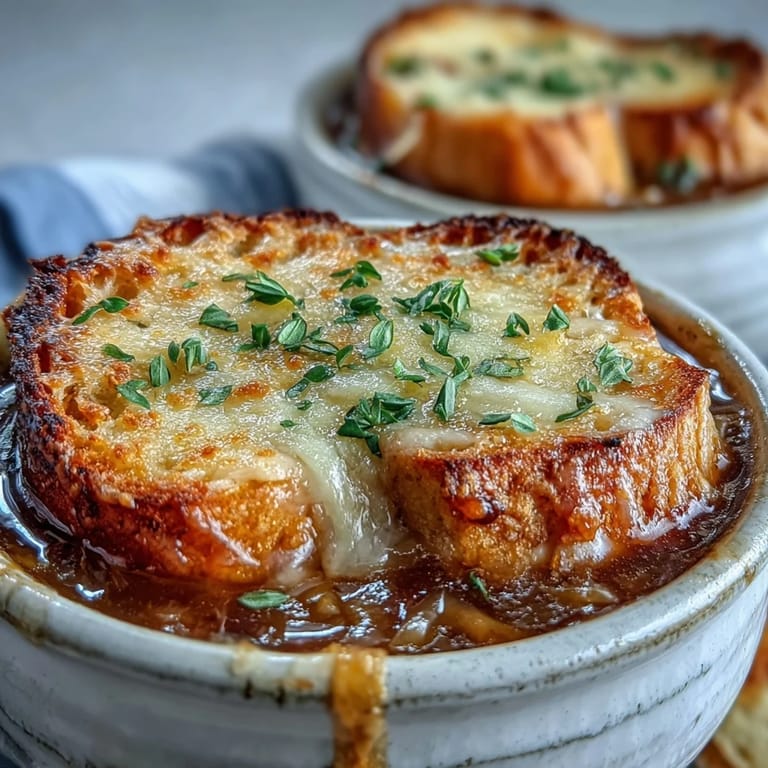
- Ladle hot soup into oven-safe bowls, top each with 2 or 3 toasted baguette slices, then pile on a generous handful of grated Gruyère and a light dusting of Parmesan if you're using it.
- Final broil:
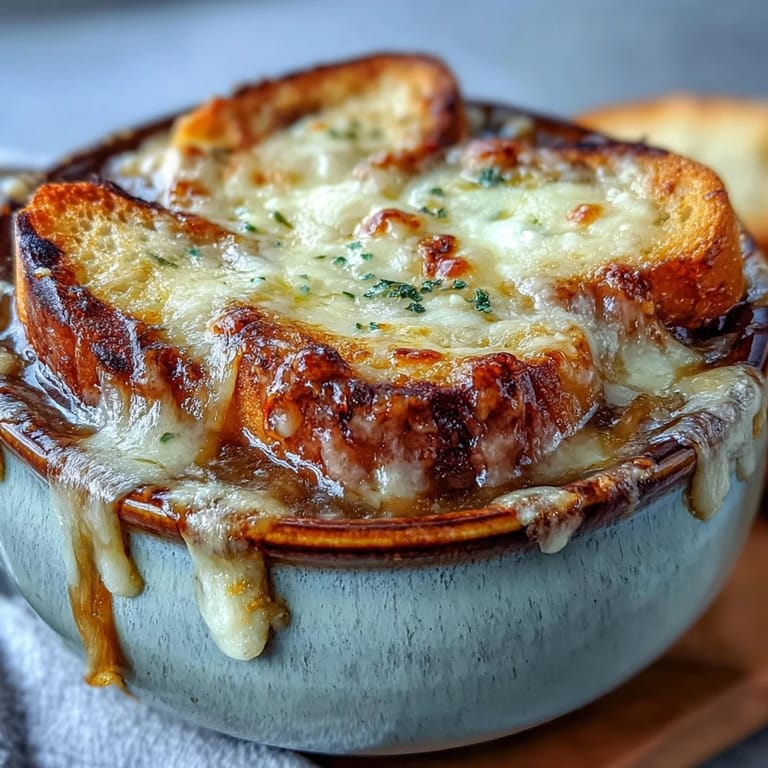
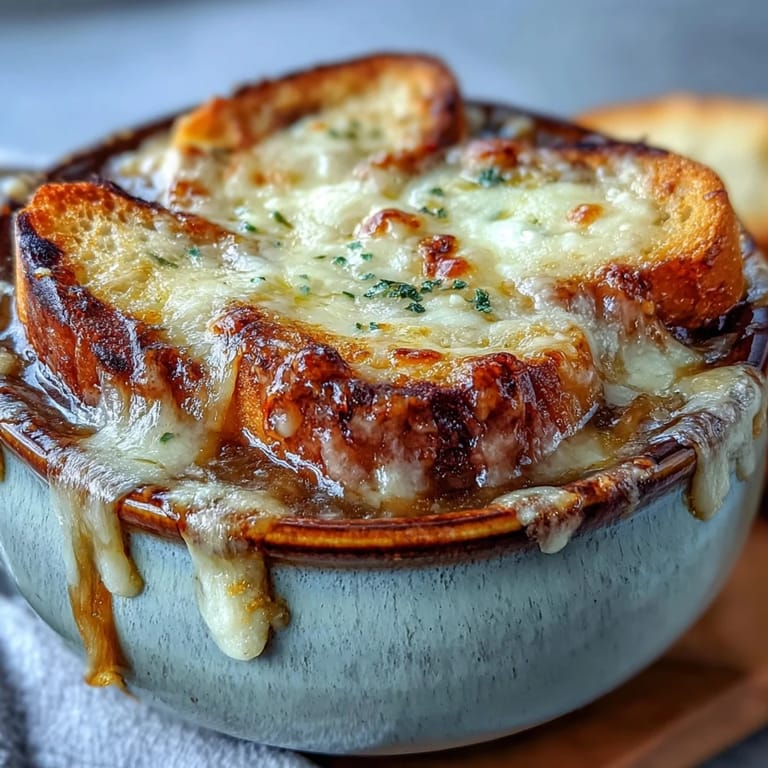
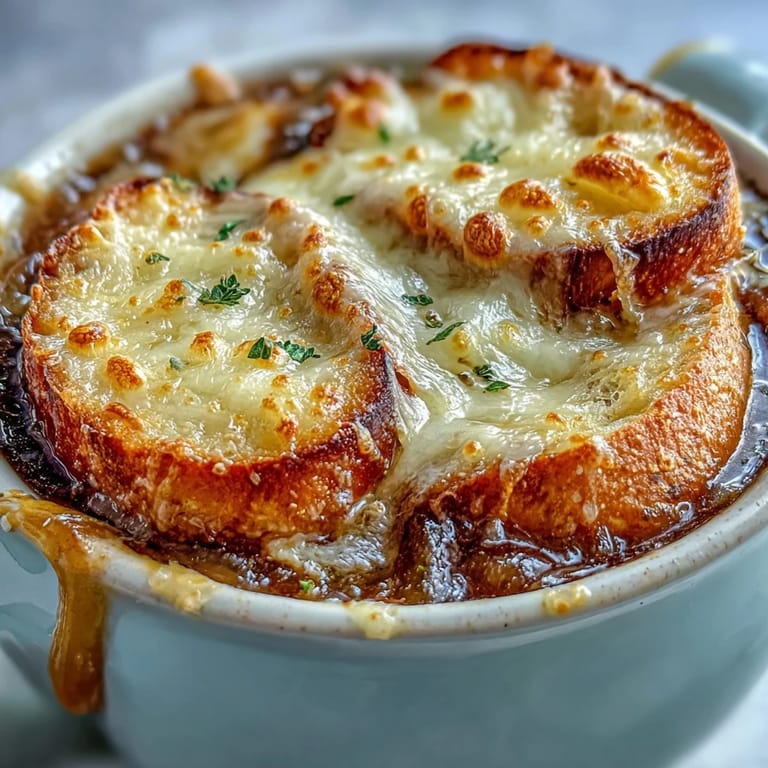
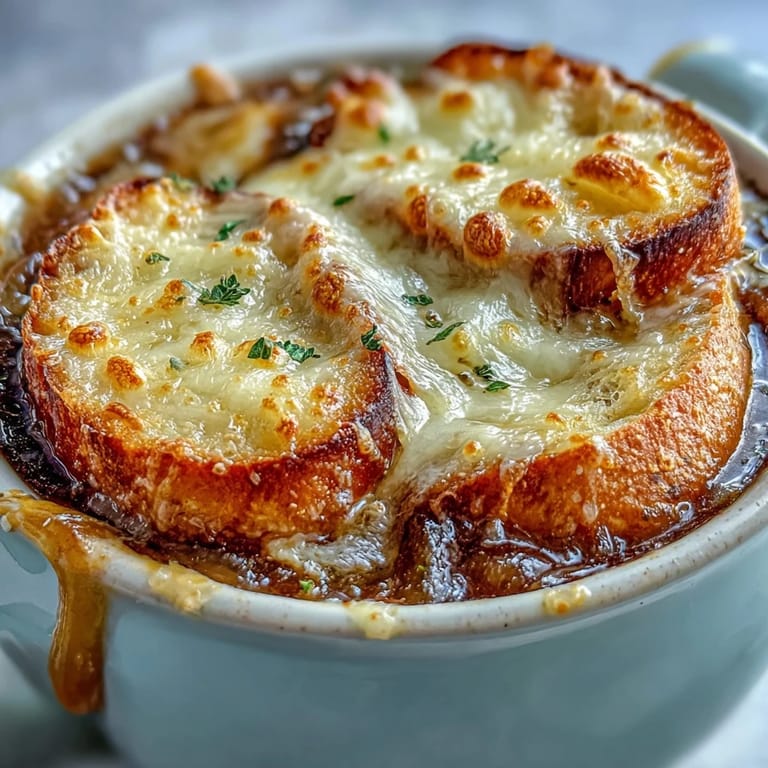
- Back under the broiler for 3 to 5 minutes, watching carefully, until the cheese melts and bubbles and turns light golden at the edges. The whole top should be cohesive, warm, and utterly irresistible.
- Serve immediately:
- This is non-negotiable; the moment cheese hits its peak is the moment to bring it to the table, maybe with a tiny pinch of extra thyme scattered on top if you're feeling fancy.
 Save to Pinterest
  Save to Pinterest
 My neighbor smelled this cooking and showed up at my door unannounced with a bottle of red wine, and we ended up eating three bowls each while talking about everything and nothing. That's when I realized this soup is more than sustenance; it's an invitation to linger.
The Magic of Slow Caramelization
The first time I tried to rush the onions, turning up the heat and stirring frantically, I ended up with a burnt, acrid mess. Then a friend explained that caramelization is a chemical reaction that needs time and moderate temperature; the sugars in the onions need to brown slowly and evenly, not char and turn bitter. Now I use that time to prep other things, enjoy a cup of tea, or just stand there watching the transformation happen. It's meditation disguised as cooking.
Building Umami Without Pretense
Adding Worcestershire sauce and soy sauce might seem like breaking tradition, but classical French cooking has always adapted to available ingredients and personal taste. These two ingredients add a savory depth that makes people ask what your secret is, and honestly, it's just knowing that umami is universal. A splash of sherry or cognac with the wine pushes this even further, adding complexity that makes the soup taste like it's been simmering for days instead of hours.
Cheese, Bread, and the Broiler Moment
The final broil is where technique meets theater; watching cheese bubble and soften and just barely brown at the edges is genuinely thrilling, and there's no shortcut for paying attention here. The bread needs to be sturdy enough to anchor the cheese but still soft enough to soak up broth, and the cheese needs to be melted enough to stretch but not so much that it separates and turns greasy. Use this moment to gather everyone around, because the presentation is half the magic.
- Gruyère melts beautifully and stays creamy, but Swiss or Emmental work equally well if that's what's in your fridge.
- Baguette slices should be cut uniform and thick enough to handle weight without crumbling into the broth.
- Watch the broiler constantly during the final cheese melt; the difference between perfection and charred is genuinely just seconds.
 Save to Pinterest
  Save to Pinterest
 This is the kind of recipe that gets better each time you make it, not because you're learning the technique but because you're learning what this soup means to you and the people you cook it for. That's the real magic.
Recipe FAQs
- → How long does it take to caramelize the onions properly?
Caramelizing the onions, leeks, and shallots takes about 35–40 minutes over medium heat with frequent stirring. This process is essential for developing the deep, sweet flavor that defines this dish.
- → Can I make this soup vegetarian?
Yes, substitute high-quality vegetable broth for beef broth and use a vegetarian Worcestershire sauce alternative. The rich umami flavor will still shine through beautifully.
- → What cheese can I use instead of Gruyère?
Swiss or Emmental cheese work well as substitutes. Both melt beautifully and offer a similar nutty, slightly sweet flavor profile that complements the caramelized alliums.
- → Do I need oven-safe bowls for this dish?
Yes, oven-safe bowls are essential since the soup is finished under the broiler to melt and bubble the cheese topping. Standard ceramic or pottery soup crocks work perfectly.
- → How can I add more depth of flavor?
Add a splash of sherry or cognac when deglazing with the white wine. This adds an extra layer of complexity and richness to the broth.
- → Can this soup be made ahead of time?
The soup base can be prepared up to 3 days in advance and refrigerated. Reheat thoroughly before ladling into bowls, then add the bread and cheese topping just before broiling and serving.