 Save to Pinterest
 There's a reason French onion soup shows up in bistros from Paris to Lyon—it's the kind of dish that transforms humble ingredients into something that tastes like it took all day, even though you're mostly just stirring and waiting. My first proper attempt happened on a rainy Tuesday when I had three onions, some stock, and absolutely nothing else to make for dinner, and somehow those simple things became a bowl of pure comfort. The trick isn't fancy technique; it's patience and the willingness to let time do the real cooking.
I made this for my neighbor last winter after she'd helped me move boxes into my new place, and watching her face when that bubbly cheese emerged from the oven told me everything I needed to know about why this soup has lasted centuries. The whole apartment smelled like caramelized onions for days afterward, which honestly wasn't a complaint.
Ingredients
- Yellow onions, 3 large, thinly sliced: Use yellow onions, not white or red—they caramelize into a deeper, sweeter flavor that becomes the soul of this soup.
- Unsalted butter, 1 tablespoon: Butter adds richness that vegetable oil alone can't match, so don't skip it even if you're using oil too.
- Olive oil, 1 tablespoon plus 1 more for bread: The combination of butter and oil prevents burning while the onions do their slow transformation.
- Garlic, 2 cloves, minced: Add this late so it doesn't burn and turn bitter during the long caramelization.
- Sugar, 1 teaspoon: A small pinch helps the onions brown faster and balances the deep savory notes.
- Salt and black pepper: Season in layers rather than all at once—taste as you go.
- All-purpose flour, 2 tablespoons: This thickens the soup slightly and helps build the base for deeper flavor.
- Dry white wine, 1/2 cup: Use something you'd actually drink; cheap wine tastes cheap in the finished soup.
- Beef or vegetable stock, 1.2 liters (5 cups): The quality of your stock matters more here than in most soups since there aren't many other flavors to hide behind.
- Fresh thyme and bay leaf: These gentle herbs let the onions be the star while adding subtle depth.
- French baguette, 4 slices about 1 inch thick: Thick slices won't fall apart in the hot soup, and they provide nice structure under the cheese.
- Gruyère cheese, 120 g (about 1 cup), grated: Its nuttiness is worth seeking out; it melts beautifully and browns differently than cheddar or mozzarella.
Tired of Takeout? 🥡
Get 10 meals you can make faster than delivery arrives. Seriously.
One email. No spam. Unsubscribe anytime.
Instructions
- Get your onions ready and start low and slow:
- Slice your onions and heat butter with olive oil in a large pot over medium heat until it's shimmering but not smoking. Toss the onions in and coat them well, then settle in—they need 35 to 40 minutes of frequent stirring to caramelize properly. This isn't a quick sauté; it's a meditation.
- Feed the magic in the middle:
- Around the halfway point (after 18 to 20 minutes), sprinkle in your sugar and salt. This helps the onions release moisture and brown deeper. Keep stirring every few minutes so they color evenly without sticking.
- Smell for doneness:
- When the onions are deep golden-brown and smell sweet and savory at the same time, add your minced garlic and cook just long enough to smell it perfume the pot—about one minute. Don't let it brown or it becomes harsh.
- Build the base with flour:
- Sprinkle flour over the onions and stir constantly for two minutes. This removes the raw flour taste and helps bind everything together into a richer sauce.
- Deglaze and add wine:
- Pour in your white wine slowly while scraping the bottom of the pot with a wooden spoon. Those browned bits stuck to the pan are pure flavor, so don't leave them behind. Let it bubble for a minute.
- Pour in stock and let it simmer:
- Add your beef or vegetable stock, then tuck in the thyme sprigs and bay leaf. Bring it to a simmer, then lower the heat and let it bubble gently uncovered for 20 to 25 minutes. This time allows flavors to marry without reducing too much.
- Toast your bread while soup simmers:
- Preheat your oven broiler and arrange baguette slices on a baking sheet. Brush both sides lightly with olive oil and slide under the broiler for about 1 to 2 minutes per side until golden and crispy. Watch them—broilers are fast and unforgiving.
- Season and finish the soup:
- Remove the thyme and bay leaf, then taste and adjust with salt and pepper. You want it to taste rich and slightly underseasoned since the cheese will add saltiness.
- Assemble in oven-safe bowls:
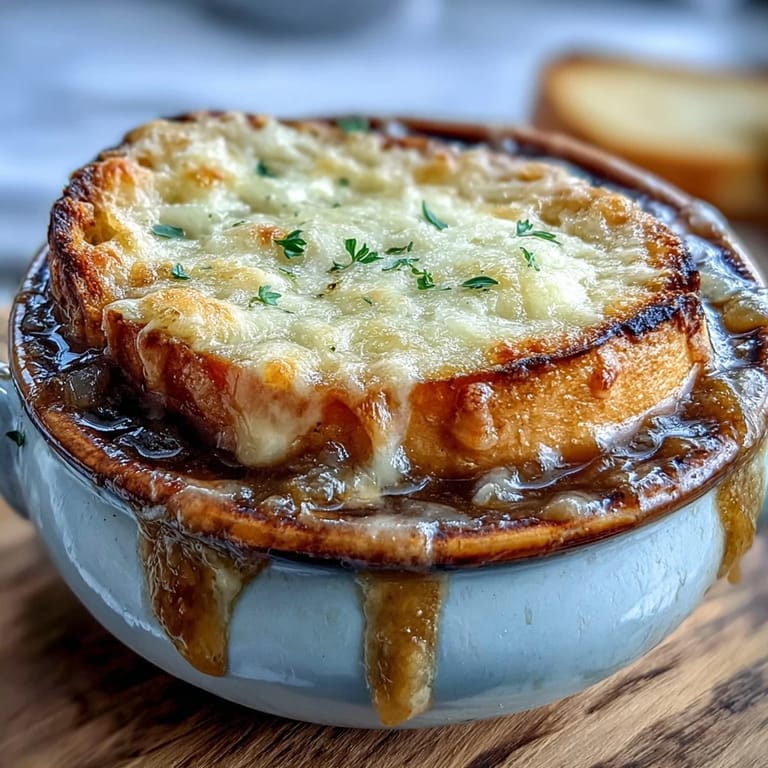
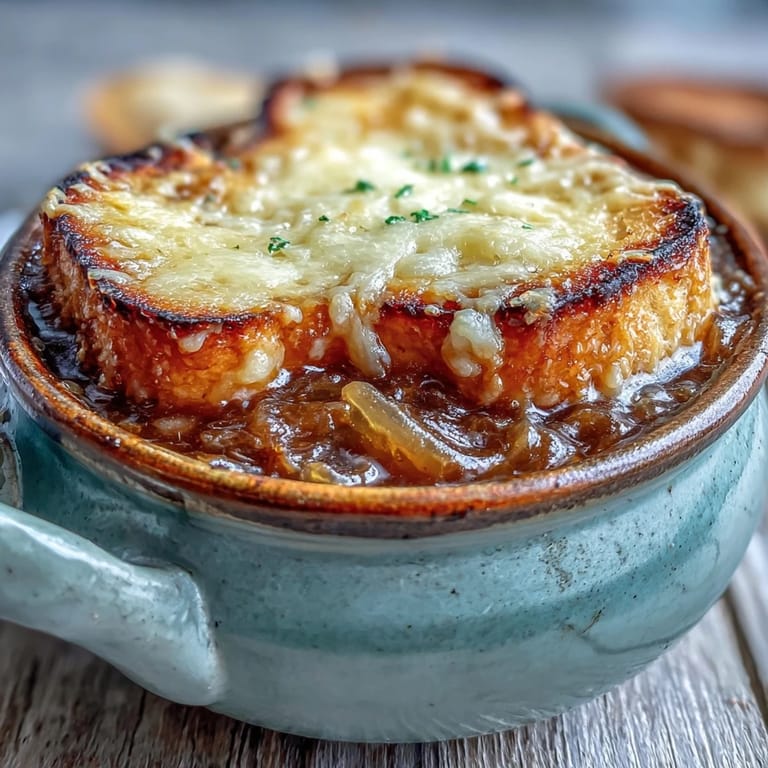
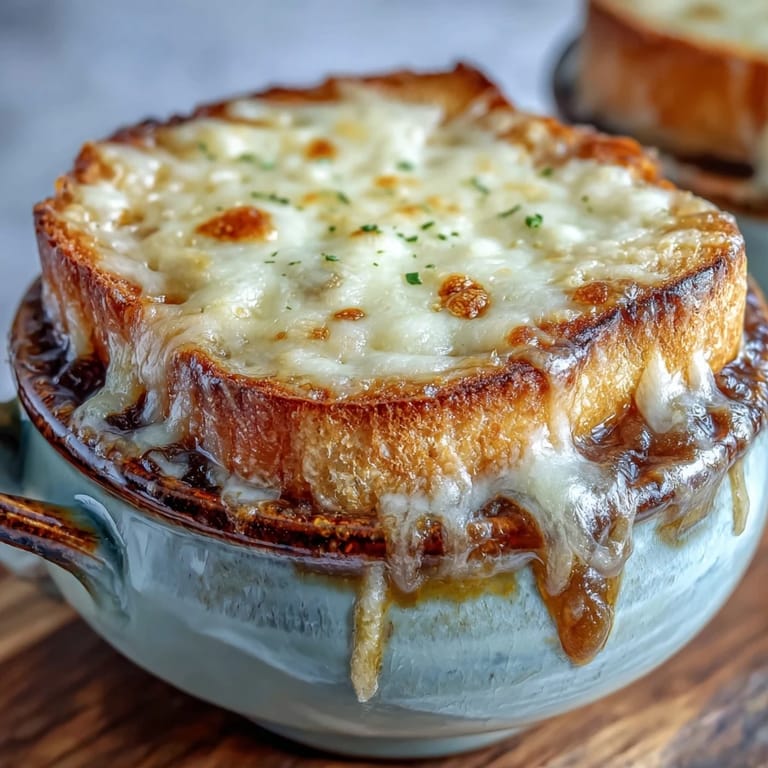
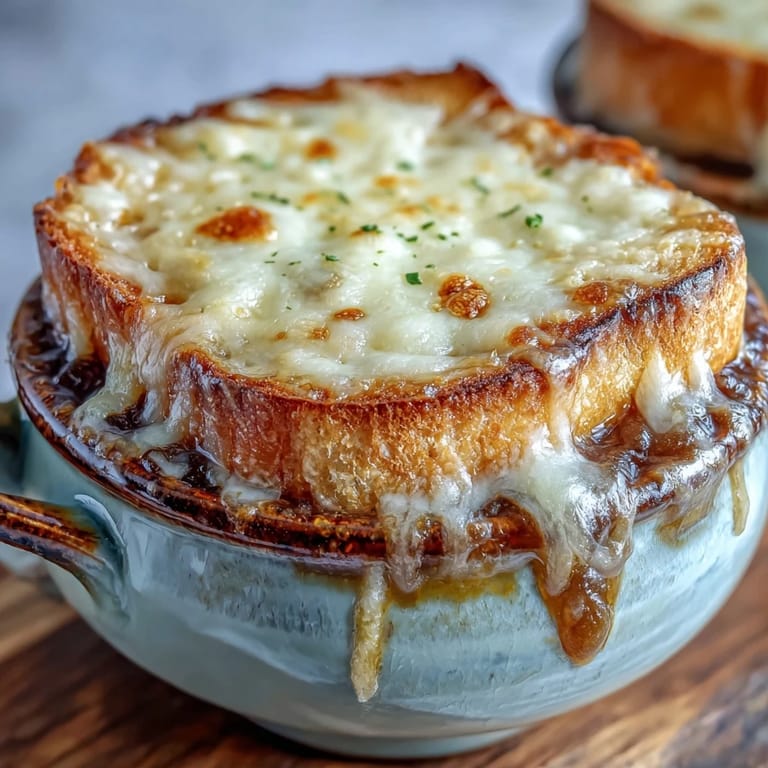
- Ladle your hot soup into oven-safe bowls, place one toasted bread slice on top of each, then pile grated Gruyère generously over the bread. Don't be shy with the cheese.
- Broil until bubbly and golden:
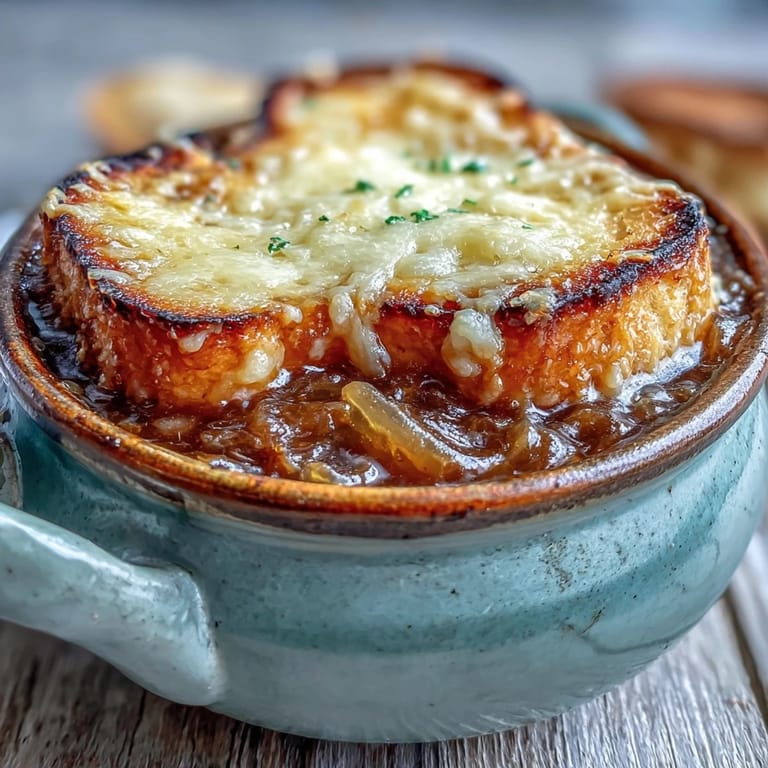
- Set the bowls on a baking sheet and slide them under the broiler for 2 to 3 minutes. The cheese should melt, bubble, and turn golden brown on top. Serve immediately while everything is still hot and the cheese has that perfect stretch.
 Save to Pinterest
  Save to Pinterest
 Last spring, a friend who claimed she didn't like onions tried a bowl of this soup out of politeness and ended up making it herself the next week. That's when I knew it wasn't really about onions at all—it's about time, heat, and knowing when to stop tinkering and let something be exactly what it is.
The Art of Caramelization
Caramelizing onions is one of those kitchen skills that feels mysterious until you actually do it, then you realize it's just chemistry and patience working together. The onions release their natural sugars, which then brown slowly, developing hundreds of complex flavors that were hidden inside all along. Start medium heat, keep stirring every few minutes, and don't walk away thinking it'll be fine—onions on high heat go from golden to burnt in about 90 seconds flat, which I learned the hard way.
Stock Matters More Than You Think
Because this soup has so few ingredients, the quality of your stock shows immediately in the final bowl. Homemade is ideal, but if you're using store-bought, taste it first before seasoning—some stocks are already quite salty. A combination of beef and vegetable stock creates a middle ground that feels deep without being aggressive, which is honestly the sweet spot for this soup.
Cheese, Bread, and Broiler Timing
The topping is where this dish transforms from good to unforgettable, but it requires a light touch and attention. Gruyère is the classic choice because it melts smoothly and develops a nutty flavor under heat, but Emmental and Comté work beautifully too if that's what you have. Watch your broiler like a hawk—the difference between golden and scorched is about 30 seconds, and once it's burnt, there's no fixing it.
- Toast your bread separately first so it stays crispy underneath the cheese instead of getting soggy from the hot soup.
- Don't skimp on the cheese; it should cover the bread completely and create that bubbly crust everyone comes back for.
- Serve immediately because once the cheese cools, it loses its magic and becomes just melted cheese on bread.
 Save to Pinterest
  Save to Pinterest
 This soup asks very little of you except patience, and in return it gives comfort that feels earned rather than easy. Make it once and you'll understand why it's been on bistro menus for over a century.
Recipe FAQs
- → How long does it take to properly caramelize onions?
Properly caramelizing onions takes 35-40 minutes over medium heat with frequent stirring. Adding sugar and salt halfway through helps achieve that deep, golden-brown color and sweet flavor that's essential to authentic French onion soup.
- → Can I substitute Gruyère cheese with another type?
Yes, Emmental or Comté work beautifully as substitutes for Gruyère. Both melt well and provide similar nutty, complex flavors. For a budget-friendly option, Swiss cheese also works, though the flavor will be milder.
- → What's the best type of stock to use?
Beef stock provides the most traditional, robust flavor. For vegetarian versions, use high-quality vegetable stock. For deeper complexity, try combining beef and chicken stock, or add a splash of brandy or sherry during deglazing.
- → Do I need oven-safe bowls for this dish?
Yes, oven-safe bowls are essential since the soup needs to go under the broiler to melt and brown the cheese topping. French onion soup crocks or ceramic bowls rated for broiler use work perfectly. Standard bowls may crack under high heat.
- → Can I make this soup ahead of time?
Absolutely. The soup base can be prepared up to 3 days in advance and refrigerated. When ready to serve, reheat the soup, then add the toasted bread and cheese before broiling. The flavors often deepen after a day or two.
- → How do I prevent burning the onions during caramelization?
Stir frequently and maintain medium heat throughout the process. If onions start sticking or browning too quickly, lower the heat slightly and add a splash of water or stock to deglaze the pan. Patience is key for even caramelization.